Brief
Study suggests dead star may have birthed a second‑generation planet
Analysis of archival Hubble observations points to a planet formed from material expelled by a dying star.
By Felo News Desk · Published
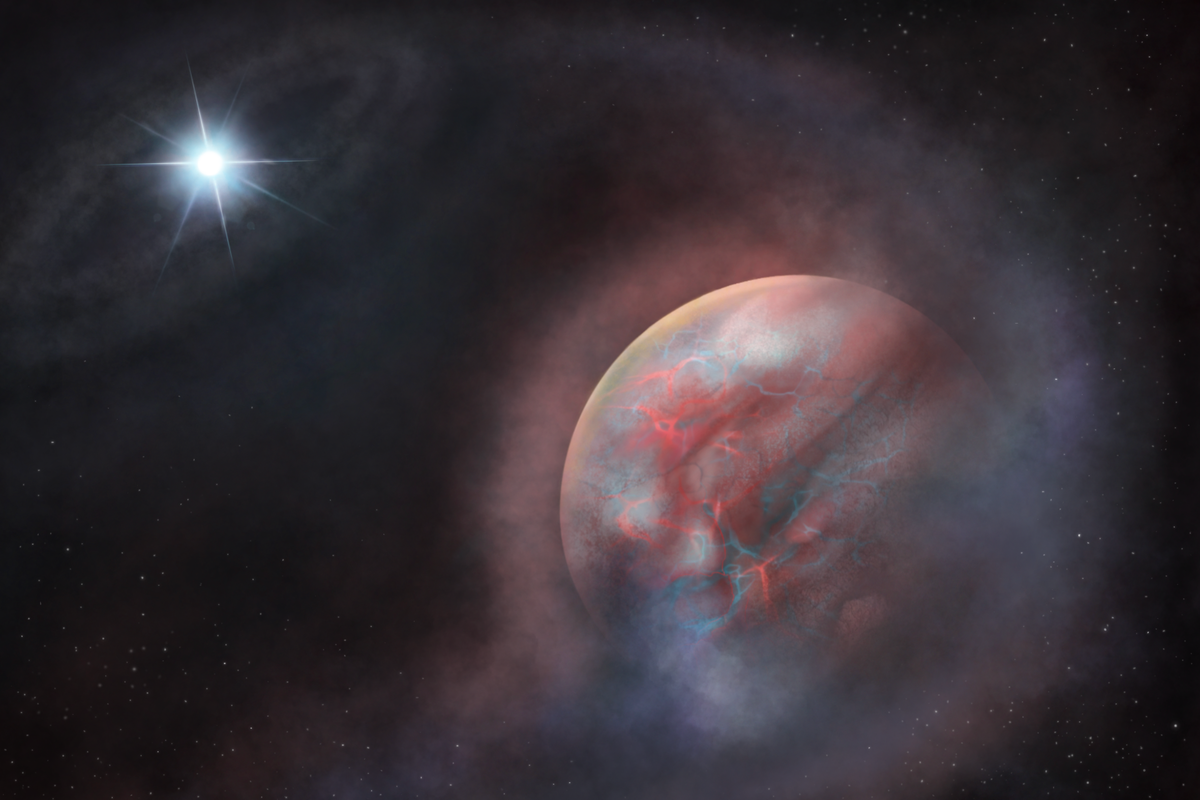
Researchers re‑examining archival Hubble Space Telescope data have identified a chemical signature that could indicate a planet formed around the white dwarf HS 0209+0832, a finding reported in a Nature Astronomy paper published on October 5.
What happened
The team, led by astronomer Jamie Williams of the University of Warwick, revisited Hubble observations of the white dwarf taken in 1999. Those data contained roughly 100 unidentified chemical features. By comparing the spectra with an updated database, the researchers found that many of the unknown lines matched the element niobium, an element rarely seen in such abundance around white dwarfs.
What the reports add
According to the scitechdaily article, the unusually high niobium levels suggest the material originated from the star’s own death rather than from the primordial cloud that formed the star. The study proposes that the expelled outer layers of the dying star coalesced into a disk from which a second‑generation planet could emerge.
What was said
Williams is quoted as saying, “What Hubble is showing us in this white dwarf system is something we haven’t seen before: a high abundance of the element niobium, the signature of which I was unfamiliar with when I first found it in the archival data.” He added that this finding “points to the systems we are familiar with only being the first chapter of a potentially much longer tale, with some new characters showing up.”
How it came about
The discovery stems from a “cold case” review of old Hubble data, a practice that has yielded new insights in other contexts, such as the recent identification of a second‑generation planet orbiting the same white dwarf in a separate Felo News article dated October 8. The new analysis builds on the notion that white dwarfs, the remnants of low‑mass stars, can host planetary formation long after the original star has died.
Key facts
- A study published on October 5 in Nature Astronomy reports evidence of a second‑generation planet orbiting white dwarf HS 0209+0832. (scitechdaily.com)
- Lead author Jamie Williams of the University of Warwick identified an unusually high abundance of niobium in Hubble data from 1999. (scitechdaily.com)
- The niobium signature suggests the planet formed from material expelled during the star’s death, not from the original protoplanetary disk. (scitechdaily.com)
Sources
- [1] scitechdaily.com — originally reported as “NASA Hubble Cold Case: A Dead Star May Have Given Birth to a New Planet”