Brief
NASA Roman Telescope demonstrates sub‑arcsecond stability in week‑long tests
Engineers verified that the Roman telescope can maintain ultra‑steady pointing for up to eight hours, a key step before full science operations.
By Felo News Desk · Published
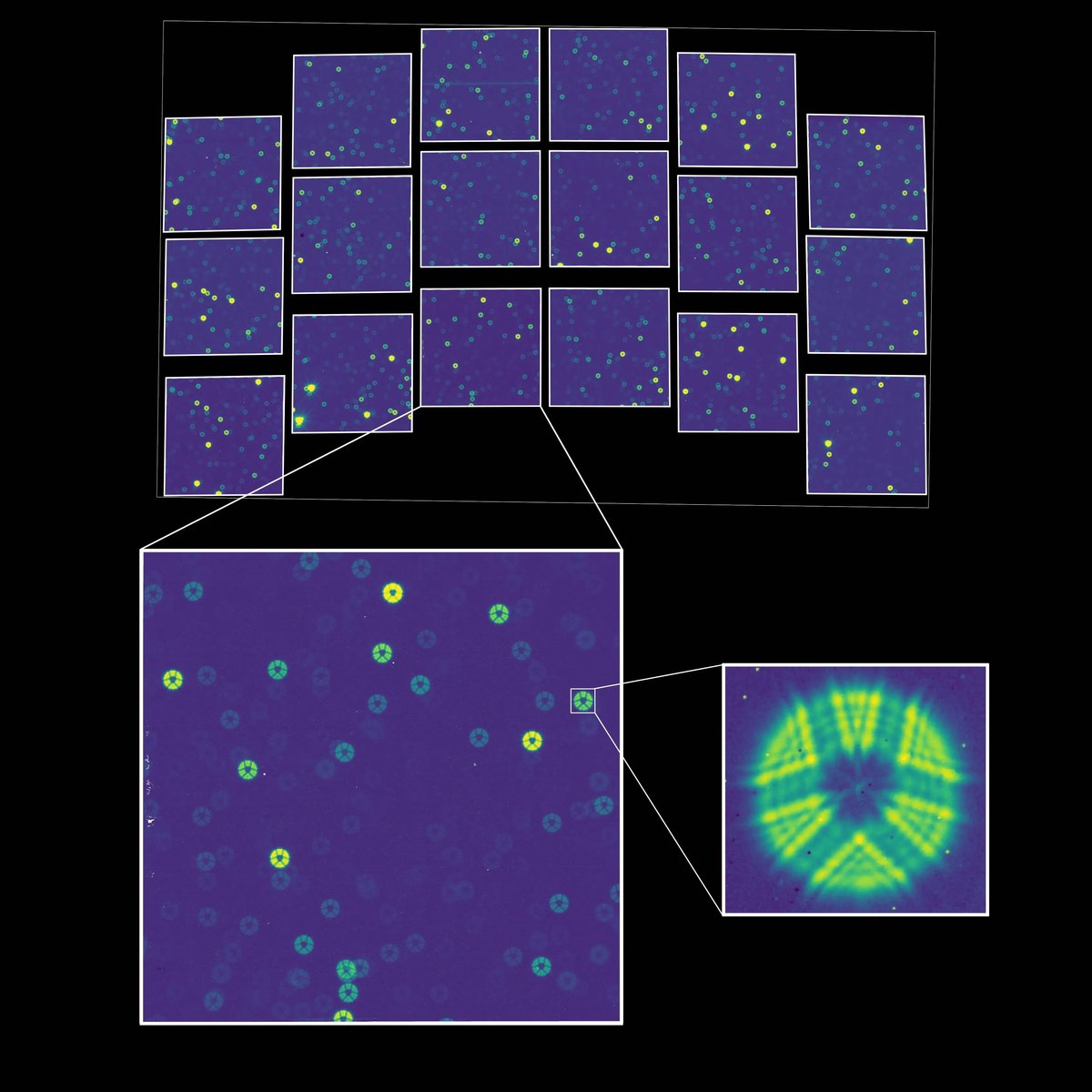
NASA’s Nancy Grace Roman Space Telescope completed a series of pointing‑stability tests in September, showing it can keep its line of sight steady to better than one‑hundred‑thousandth of a degree. The fine‑guidance system was exercised from Sept. 15‑21, when engineers used small sections of each of the instrument’s 18 detectors to track known guide stars. On Sept. 22 the telescope’s Coronagraph Instrument received its first cosmic light, marking the transition from engineering checks to early science readiness.
During the tests the spacecraft’s attitude control system received guide‑star positions about four times per second, allowing it to make minute adjustments and counter any drift. The results demonstrated stability of better than 1/100,000 of a degree for half‑hour intervals when using the Wide Field Instrument, and for up to eight‑hour intervals with the Coronagraph Instrument, which requires longer exposures.
"Every Roman observation relies on its ability to stay precisely pointed at the correct region of space long enough to collect an image, which can take from minutes to hours for a deep exposure," said Begoña Vila, the telescope’s guiding instrument systems lead at NASA’s Goddard Space Flight Center. "The fine‑guidance system reports the positions of the guide stars about four times each second to the attitude control system, which can move the observatory a tiny amount to counter any drift as needed. Our tests confirmed that we are able to keep the observatory very stable for science operations: better than 1/100,000 of a degree for half an hour at a time for Wide Field Instrument observations or for eight hours at a time for Coronagraph Instrument observations, which take much longer. This was a very exciting moment for the team."
Vila added that the achieved stability is comparable to keeping a laser focused on a U.S. dime from roughly 150 miles away; engineers aim to improve the performance further, which would extend the analogy to about 230 miles. The telescope will also trial a novel spectral‑guiding mode, using detailed wavelength patterns rather than point‑like star images, a capability that could simplify future guidance operations.
Key facts
- The Roman telescope’s fine‑guidance system was tested from Sept. 15‑21, 2026. (sciencedaily.com)
- Stability better than 1/100,000 of a degree was achieved for half‑hour Wide Field observations. (sciencedaily.com)
- Stability for up to eight hours was demonstrated for Coronagraph Instrument observations. (sciencedaily.com)
- Guide‑star positions are reported to the attitude control system about four times per second. (sciencedaily.com)
- A new spectral‑guiding mode will be validated in the coming weeks. (sciencedaily.com)
Sources
- [1] sciencedaily.com — originally reported as “NASA’s Roman telescope just opened its planet-hunting eye”