Brief
Tiny chemical tweak makes RNA form droplets more readily, study finds
Researchers report that a minute chemical variation enables RNA to create liquid‑like condensates that may have helped bridge pre‑biotic chemistry to the first cells.
By Felo News Desk · Published
A study led by the University at Buffalo and published in Nature Communications reveals that a very small chemical difference between RNA and DNA strongly influences RNA’s ability to form liquid‑like droplets, or condensates, as temperatures rise. The research, reported by ScienceDaily on October 3, suggests that this property could have aided early molecular interactions before cellular membranes existed.
What happened
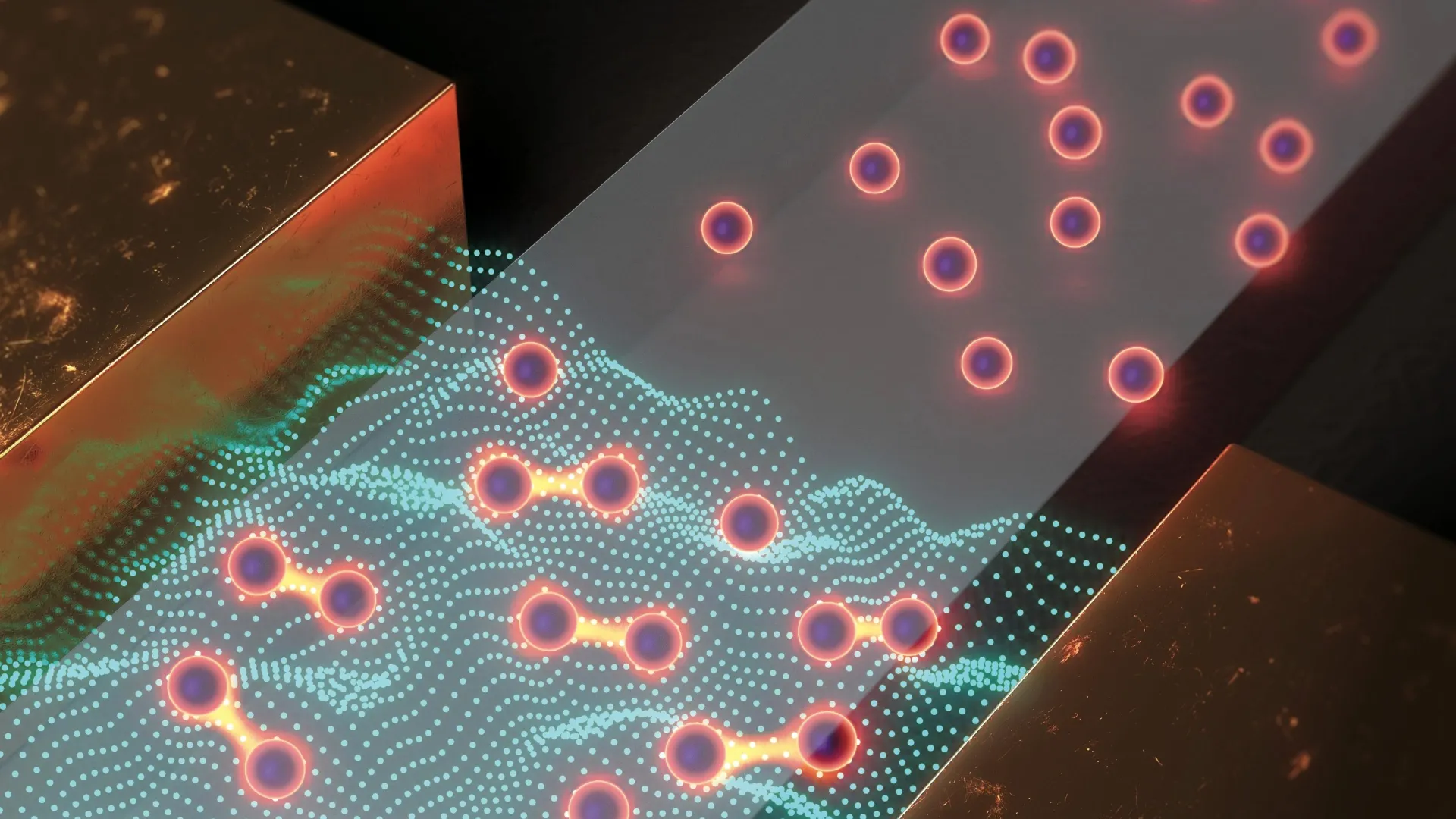
The team compared RNA and DNA molecules under increasing temperatures and observed that RNA more readily assembled into condensates. These droplets not only concentrate RNA molecules but also tend to interconnect, forming networks that can transition from a fluid state to a more rigid, gel‑like structure. The experiments built on a 2023 study by the same group that first documented RNA’s tendency to organize into droplets at high temperatures.
What the reports add
ScienceDaily notes that the new work identifies the specific chemical feature—a subtle difference in the backbone chemistry of RNA versus DNA—that drives this behavior. The article also highlights that the condensates’ ability to become gel‑like may have provided primitive protection for RNA in harsh pre‑biotic environments, a detail not emphasized in the earlier 2023 paper.
What was said
"These findings reveal, for the first time, how remarkably small changes in molecular chemistry can control the emergence of much larger, self‑organized biomolecular structures like RNA condensates," said lead corresponding author Priya R. Banerjee, PhD, Twentieth Century Club Professor in the UB Department of Physics. She added that the results could eventually help address deeper questions about whether such condensates helped bridge the gap between simple molecules and the earliest forms of life.
How it came about
The investigation is part of Banerjee’s broader research into RNA world theory, which posits that RNA played a central role in the origin of life by both storing genetic information and catalyzing reactions. Prior work by Banerjee’s group demonstrated RNA’s natural propensity to form droplets at elevated temperatures, but the new study directly compares RNA with DNA to pinpoint the chemical basis for the difference. Funding for the project came from the National Institutes of Health, the National Science Foundation, and the Hypothesis Fund, and the work was conducted in collaboration with Jerelle Joseph, PhD, of Princeton University.
Key facts
- A minute chemical difference between RNA and DNA boosts RNA droplet formation at higher temperatures. (sciencedaily.com)
- RNA condensates can interconnect and transition from fluid to gel‑like states as they mature. (sciencedaily.com)
- The study was led by Priya R. Banerjee at the University at Buffalo, with collaboration from Princeton’s Jerelle Joseph. (sciencedaily.com)
- Funding came from NIH, NSF, and the Hypothesis Fund. (sciencedaily.com)
- The findings were published in early‑access <i>Nature Communications</i>. (sciencedaily.com)
Sources
- [1] sciencedaily.com — originally reported as “One tiny chemical difference between RNA and DNA may help explain how life began”