Brief
UChicago researchers find electrons moving together extremely slowly in Fe5GeTe2
The finding, reported in Science Advances, could reshape ideas about magnetic interactions in van der Waals magnets.
By Felo News Desk · Published
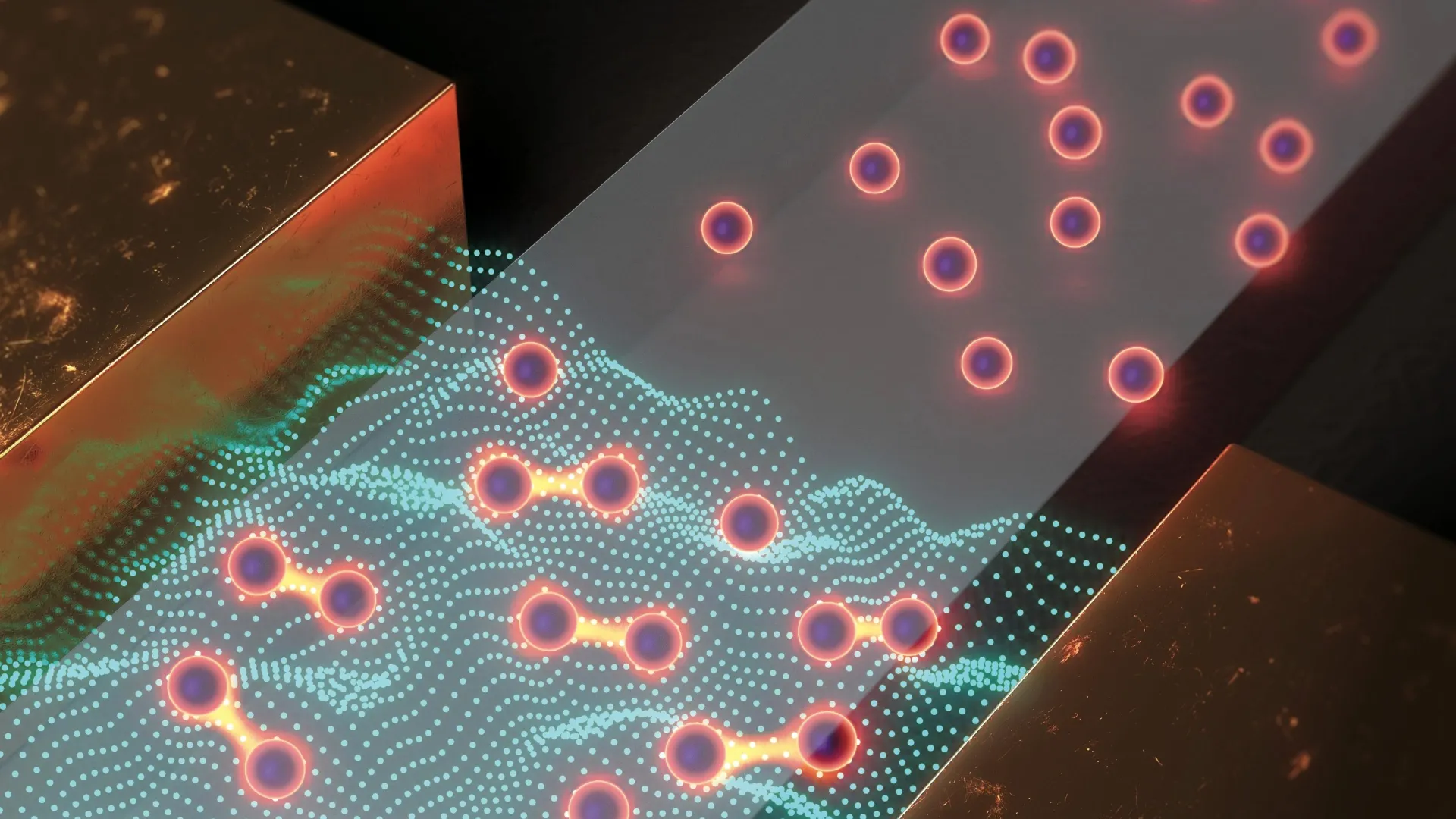
Researchers at the University of Chicago Pritzker School of Molecular Engineering have observed a charge‑ordered state in the van der Waals magnet Fe5GeTe2 where large numbers of electrons move together extremely slowly while retaining quantum coherence, according to a Science Advances paper.
What happened
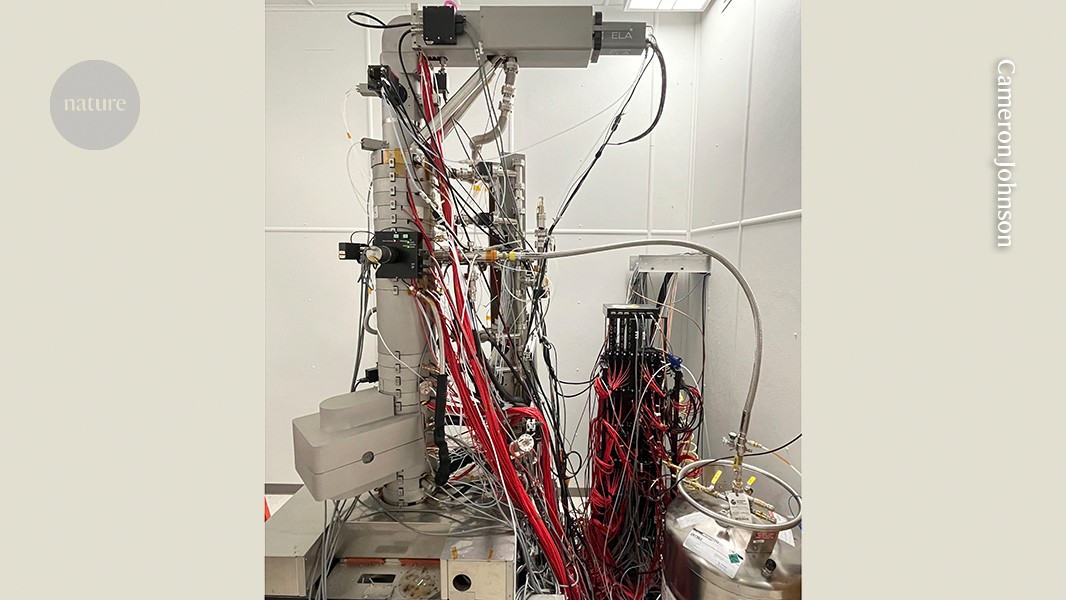
The team, led by Assistant Professor Shuolong Yang, used angle‑resolved photoemission spectroscopy (ARPES) with an ultraviolet laser focused on a 10‑micrometer spot of Fe5GeTe2. The measurements revealed a flat electronic band, indicating that electron energies vary little across the band and that the electrons travel at a very low speed. In this flat‑band regime, thousands or millions of electrons act collectively rather than as independent particles.
What the reports add
Science Daily notes that Fe5GeTe2, discovered seven years ago, belongs to a family of two‑dimensional van der Waals magnets that can be exfoliated into atomically thin layers. The article highlights that such materials are being explored for unconventional memory technologies because their magnetic properties differ from traditional magnets.
What was said
"This is a fundamental discovery that deviates from theoretical predictions," Yang told Science Daily. "We now have to go back and think about the magnetic interactions of this material from scratch, but it also leads to new possibilities in using this material for new kinds of memory devices." He added, "We're not measuring one electron. We're measuring the interaction of thousands or millions of electrons, and they are all moving together in a coherent…" (the quote continues in the source).
How it came about
Fe5GeTe2 was first reported as a van der Waals magnet in 2019. Over the past decade, researchers have pursued two‑dimensional materials that exhibit superconductivity or charge ordering, aiming to harness their quantum properties for next‑generation technologies. Yang’s group built on prior ARPES studies of related magnets, focusing on the interplay between electronic structure and magnetism in ultra‑thin layers.
Key facts
- UChicago researchers observed a flat electronic band in Fe5GeTe2 indicating ultra‑slow collective electron motion. (sciencedaily.com)
- The discovery was published in Science Advances and challenges existing theoretical predictions. (sciencedaily.com)
- Fe5GeTe2 is a van der Waals magnet discovered seven years ago and is being studied for novel memory devices. (sciencedaily.com)
Sources
- [1] sciencedaily.com — originally reported as “Electrons slow to a crawl in a strange new quantum state”