Brief
New Jurassic mammal relative Megacoadon songi unearthed in Inner Mongolia
The 52‑cm fossil, described in Nature, suggests early mammal relatives were larger and possibly semi‑aquatic.
By Felo News Desk · Published
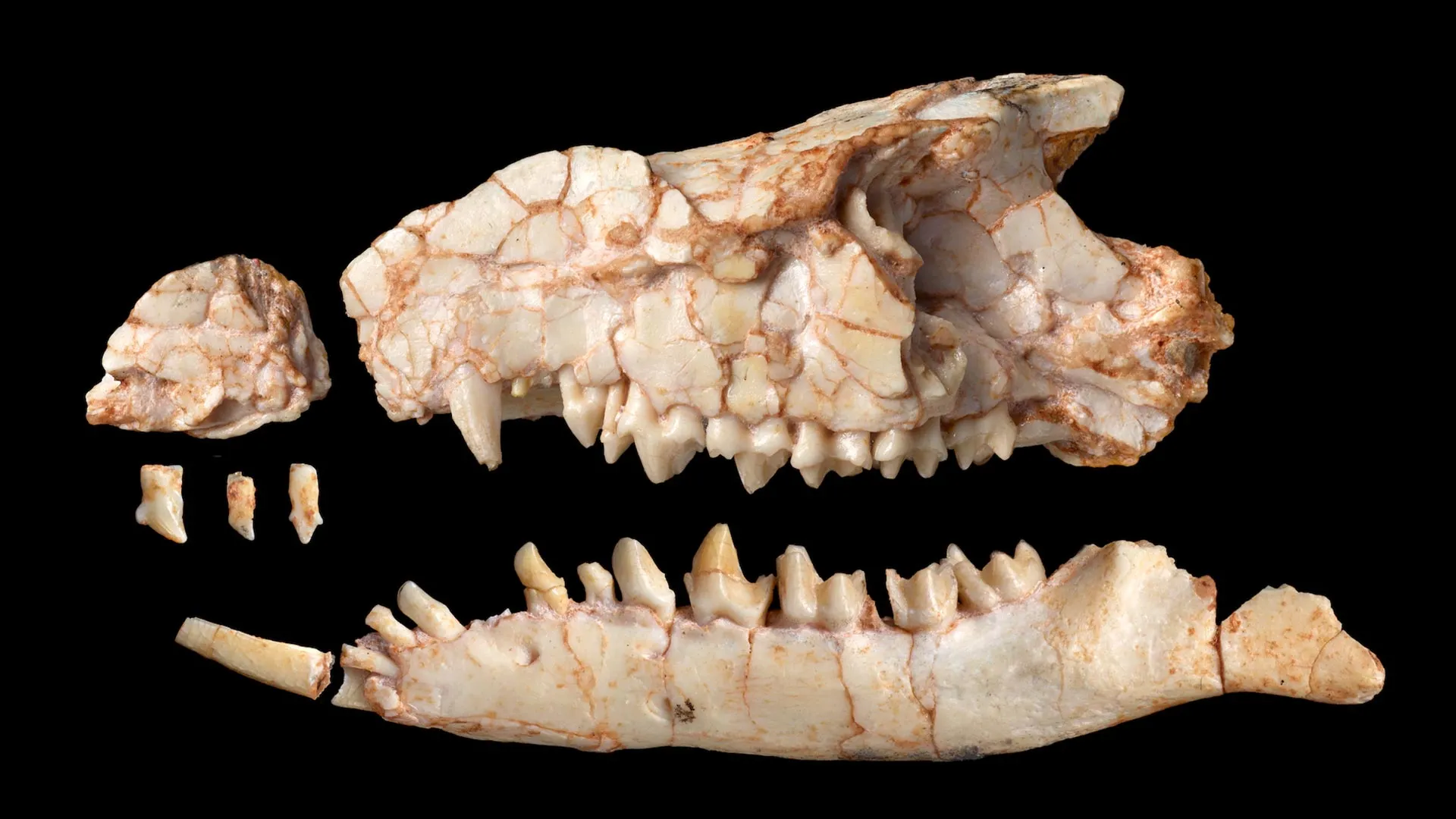
An international team led by Chinese researchers announced the discovery of a 160‑million‑year‑old fossil near Ningcheng in Inner Mongolia, naming it Megacoadon songi. The specimen, described in Nature on Oct. 7, measures about 52 cm in length and weighs roughly two kilograms, making it the largest known docodont, an early mammal relative.
Its well‑preserved skull, robust body, and unusually long, curved tail hint at a swimming capability, while sharp teeth suggest a diet of small prey. Researchers compare its possible lifestyle to that of the modern platypus. Associate Professor Li Yiqun of Shenyang Normal University said the find challenges the view that Mesozoic mammal relatives were uniformly tiny.
Key facts
- The fossil was found near Ningcheng in Inner Mongolia, China. (dailytimes.com.pk)
- The species is named Megacoadon songi. (dailytimes.com.pk)
- It measures about 52 centimetres long and weighs around two kilograms. (dailytimes.com.pk)
- The discovery was published in Nature on Oct. 7, 2026. (dailytimes.com.pk)
Sources
- [1] dailytimes.com.pk — originally reported as “Scientists discover largest known Jurassic docodont mammal relative in China”