Brief
Gemini Telescope Captures High‑Definition View of 1181 Supernova Remnant
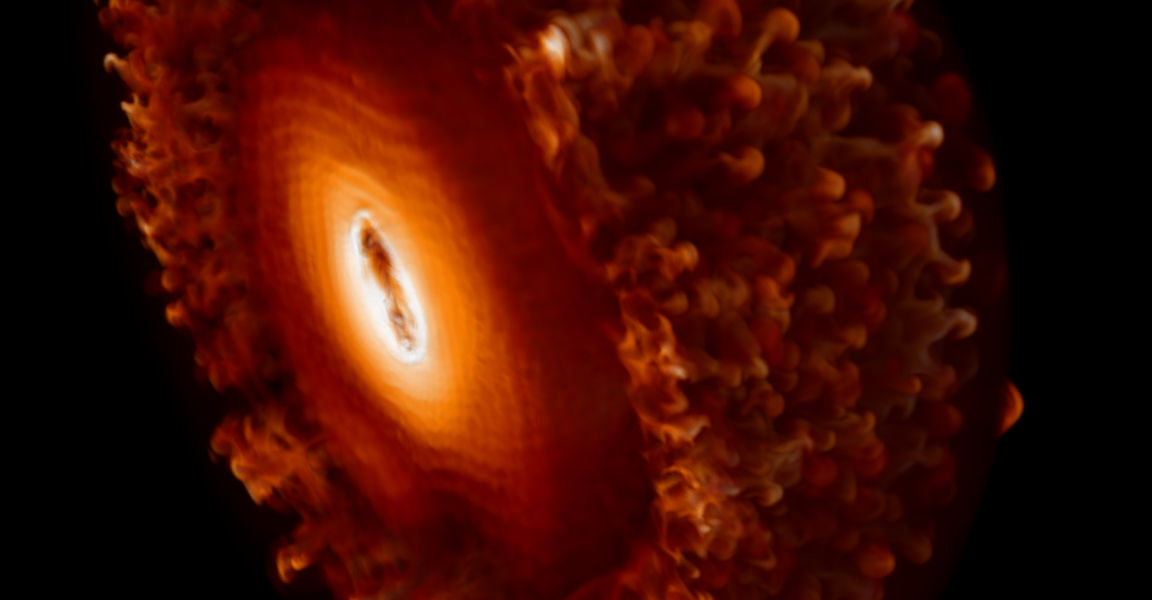
Astronomers using Gemini North have produced the most detailed image yet of the Pa 30 nebula, showing uniform “cosmic pearls” that may shed light on stellar death.
By Felo News Desk · Published
International Gemini Observatory astronomers announced on Oct. 10, 2026 that a new high‑definition image of the Pa 30 nebula – the remnant of the supernova first recorded in 1181 – reveals unprecedented detail.
What happened
The Gemini North telescope in Hawaii, equipped with the Gemini Multi‑Object Spectrograph, captured the nebula with roughly ten times more structural detail than any previous observation. The image shows filamentary strands broken into bead‑like knots, each about four light‑days across.
What the reports add
Wired notes that the knots are “enormous,” with the planetary region of our solar system fitting inside each about ten times over. The study, published in The Astrophysical Journal, highlights the regular size and alignment of the knots, a pattern not expected in typical supernova ejecta.
What was said
Co‑author Ilaria Caiazzo told Wired, “The knots are quite strikingly uniform. We are excited to try to model them.”
How it came about
Pa 30 is unusual because its central star survived the explosion, earning the nickname “zombie star.” Earlier observations had shown a fireworks‑like shape, but the new Gemini data resolves the filaments into the bead‑on‑a‑string morphology that may help researchers understand why some stars partially survive thermonuclear supernovae.
Key facts
- Gemini North captured the most detailed image of the Pa 30 nebula to date. (wired.com)
- The image reveals bead‑like knots about four light‑days in diameter. (wired.com)
- Each knot could contain the planetary region of the solar system ten times over. (wired.com)
- The study appears in The Astrophysical Journal. (wired.com)
- Pa 30 is the remnant of a supernova observed in 1181, with a surviving central star. (wired.com)
Sources
- [1] wired.com — originally reported as “Humans Watched This Supernova Explode Nearly a Millennium Ago. Now You Can See It in High Definition”