Brief
Hubble data reveal possible second‑generation planet around white dwarf HS 0209+0832
Astronomers say a rare niobium abundance in archival Hubble spectra points to a planet that may have formed after its host star died.
By Felo News Desk · Published
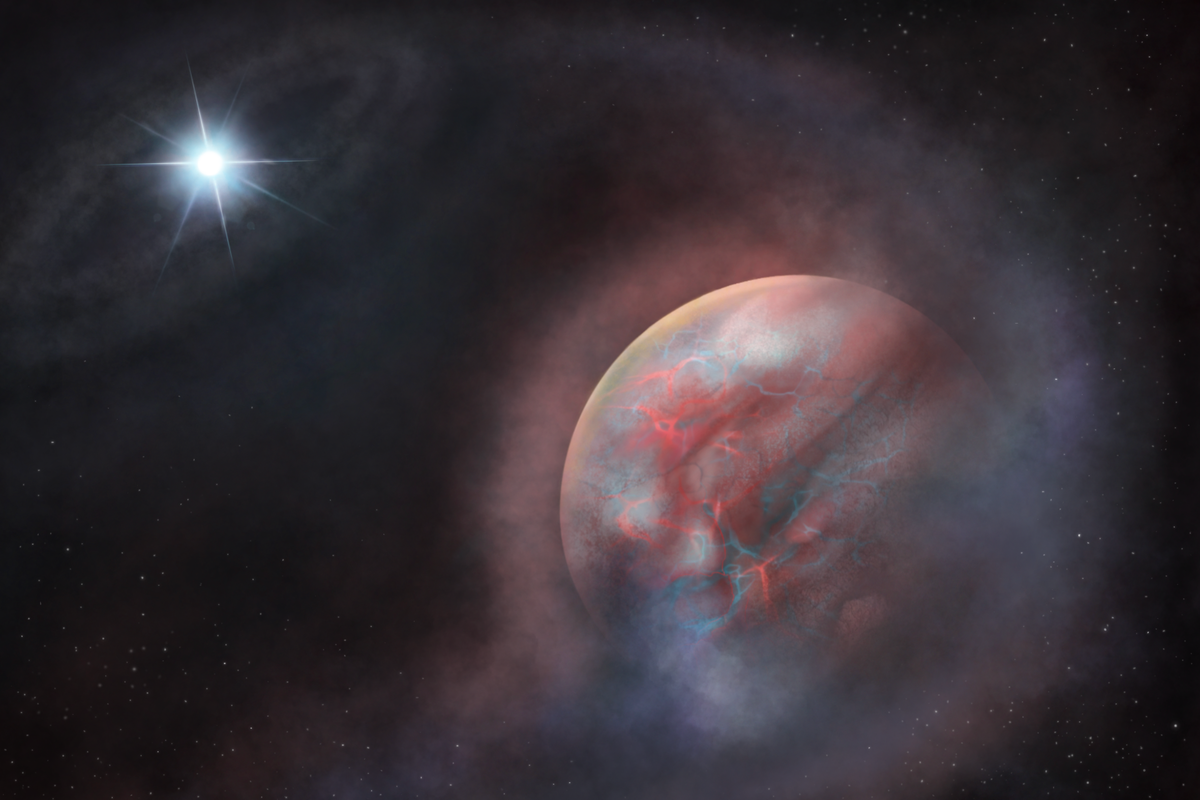
Re‑examining Hubble Space Telescope images from 1999, a team led by Jamie Williams of the University of Warwick says the white dwarf HS 0209+0832 shows an unusually high amount of the element niobium, a signature they interpret as evidence of a second‑generation planet formed from material expelled when the star died.
What happened
The original Hubble observations of HS 0209+0832 were taken in 1999 but left many spectral features unidentified. Using an updated chemical database, Williams identified niobium as accounting for many of those features. The element, heavier than iron, is not produced in normal stellar fusion and is instead forged in the extreme conditions of dying stars. The researchers propose that after the star shed its outer layers, some of the enriched material coalesced into a gas‑giant planet that now orbits the white dwarf.
What the report adds
ScienceDaily notes that niobium has not been reported in any other white dwarf analyzed to date, making this detection unique. The study, published on 5 October in Nature Astronomy, also highlights that the presence of such heavy elements serves as a “signpost of death throes” of the star, according to Nicholas Stone, a theoretical astrophysicist at the University of Wisconsin‑Madison and co‑author of the paper.
What was said
"Rather than the white dwarf stage being a kind of epilogue to the story of a star and its planets, this research points to the systems we are familiar with only being the first chapter of a potentially much longer tale," Williams told ScienceDaily.
Stone added, "Niobium and other elements heavier than iron are astronomically special because, unlike many common elements, they are not formed in the cores of stars by thermonuclear fusion. Instead, these heavy elements can only be synthesized in the exotic conditions that briefly emerge inside dying stars."
How it came about
The discovery builds on earlier Felo News coverage of the same system, which reported the identification of a possible “phoenix” world orbiting HS 0209+0832 and highlighted the planet’s 4.4‑day orbital period and Jupiter‑like size. Those articles referenced the same 1999 Hubble data and the niobium signature that now underpins the new interpretation.
Key facts
- The study was published on 5 October 2026 in Nature Astronomy. (sciencedaily.com)
- Lead author Jamie Williams identified a high abundance of niobium in Hubble spectra from 1999. (sciencedaily.com)
- Niobium is a heavy element formed in dying stars, not in normal stellar fusion. (sciencedaily.com)
- Researchers propose a gas‑giant planet formed from expelled material now orbits white dwarf HS 0209+0832. (sciencedaily.com)
Sources
- [1] sciencedaily.com — originally reported as “Hubble Space Telescope may have found a planet born after its star died”