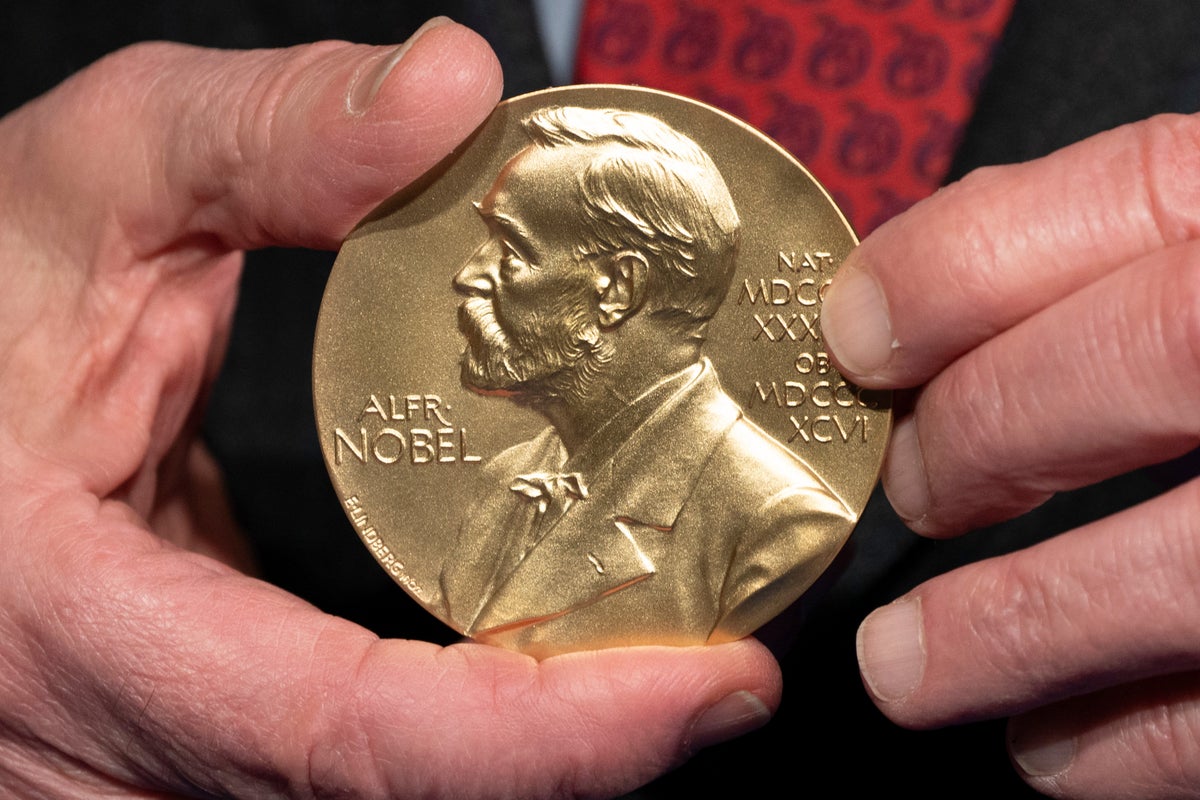
Nobel Prize in Chemistry awarded to Henri Kagan and Kenso Soay for mirror‑image breakthrough
The Royal Swedish Academy honored the pair for uncovering how mirror‑image molecules can be produced selectively, a step crucial for drug design.
By Felo News Desk · Published
The 2026 Nobel Prize in Chemistry was announced on Wednesday, naming French chemist Henri Kagan of Université Paris‑Sud and Japanese chemist Kenso Soai of Tokyo University of Science as laureates.
What happened
The Nobel Committee cited the duo’s discovery of non‑linear effects and autocatalysis in asymmetric organic synthesis, enabling the creation of a single enantiomer of chiral molecules and addressing the long‑standing question of how homochirality can arise spontaneously in nature. The award carries a prize of 12 million Swedish kronor (about $1.2 million) for each laureate.
What the reports add
- Scientific American noted that Kagan and Soai were the first to devise a method that reliably yields only one mirror image of a chiral compound, describing it as a breakthrough in “mirror” chemistry.
- France 24 emphasized the relevance of the discovery for pharmaceutical development and quoted the committee’s description of the work as “decisive for the development of pharmaceuticals.”
- The Independent illustrated the practical impact by contrasting the two enantiomers of carvone – one smelling of mint, the other of caraway – and explained why drug designers need to control which mirror image is produced.
What was said
“Henri Kagan and Kenso Soai have provided a solution to a chemical mystery that is over a century old: how homochirality can emerge spontaneously,” Heiner Linke, chair of the Nobel Committee for Chemistry, said in a news release. (France 24; Independent)
“The chemical reactions they have developed are spectacular.” – Heiner Linke, Nobel Committee chair (France 24; Independent)
“Taken together, the groundbreaking discoveries by Henri Kagan and Kenso Soai have reshaped our understanding of molecular chirality, how it is created, amplified and transmitted.” – Peter Somfai, member of the Nobel Committee (Scientific American)
“One of the most exciting days of my life… I’m very glad to share the prize with Professor Henri Kagan.” – Kenso Soai, speaking to the committee (Scientific American; Independent)
How it came about
The chemistry prize follows a series of Nobel recognitions this year, including the physics prize to Francis Halzen for IceCube research (reported by Felo News on 2026‑10‑06). Earlier coverage highlighted the 2025‑2026 trend of Nobel awards spotlighting research with direct implications for drug synthesis and environmental technologies.
Key facts
- Henri Kagan and Kenso Soay won the 2026 Nobel Prize in Chemistry. (scientificamerican.com)
- The award recognises their discovery of non‑linear effects and autocatalysis in asymmetric organic synthesis. (france24.com)
- Kagan is affiliated with Université Paris‑Sud in Orsay, France; Soay with Tokyo University of Science, Japan. (independent.co.uk)
- Heiner Linke, chair of the Nobel Committee for Chemistry, described the work as solving a century‑old mystery about homochirality. (france24.com)
- Soay said winning the prize was one of the most exciting days of his life. (scientificamerican.com)