Brief
NASA backs mission to probe possible lava‑tube cave beneath Moon’s Marius Hills Pit
The GIMLI project, led by the Planetary Science Institute, will use radar, seismic and gravity instruments to search for a subsurface void.
By Felo News Desk · Published
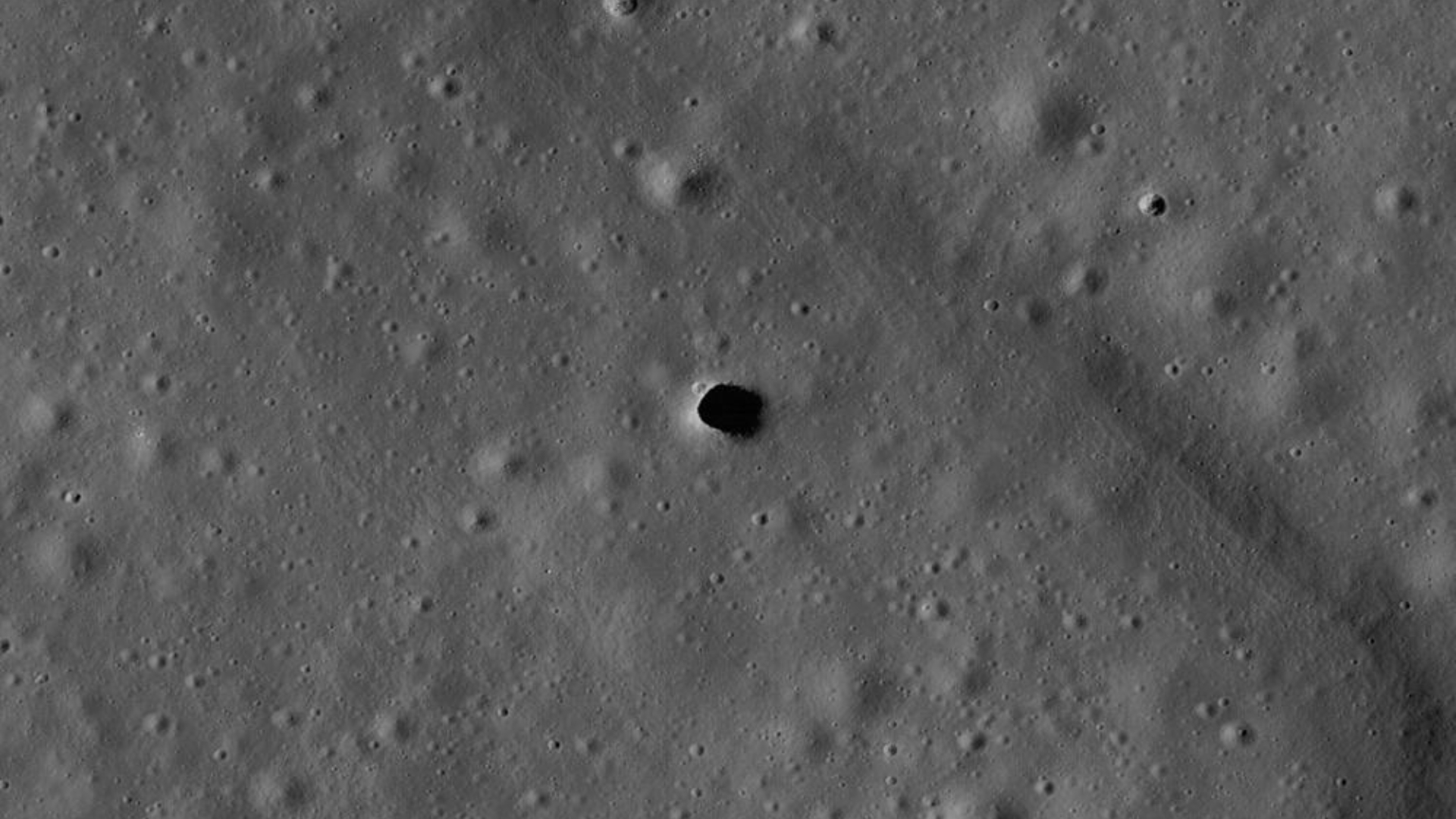
NASA is funding a Planetary Science Institute‑led investigation to determine whether a large lava‑tube cave extends from the Marius Hills Pit (MHP) on the Moon’s surface, according to SciTechDaily.
What happened
The agency selected the GIMLI (Geophysical Instruments for Marius Lunar pit Investigation) project under its PRISM program. A lander and rover will carry ground‑penetrating radar, active‑source seismic equipment, a gravimeter and cameras to the pit, which is about 34‑45 m deep and 65 × 90 m across. The instruments will probe the subsurface, record vibrations, and measure gravity anomalies to estimate the size of any void.
What the reports add
SciTechDaily notes that the Norwegian Space Agency will supply the radar, while Honeybee Robotics – a Blue Origin subsidiary – will build most of the payload, integrate the instruments onto the lander and rover, and co‑lead lunar surface operations with PSI. Co‑investigators from Boise State University, Johns Hopkins University, the Lunar and Planetary Institute and the University of Oslo will also contribute.
What was said
“It’s long been a desire of mine to reintroduce intentional active‑source seismic methods to planetary science, as it has essentially not been done since the Apollo astronauts conducted the first seismic surveys on the Moon,” GIMLI leader Than Putzig, PSI Associate Director and Senior Scientist, told SciTechDaily.
How it came about
The mission follows earlier Felo News coverage of NASA’s selection of the GIMLI investigation (NASA selects GIMLI mission to probe possible lunar lava‑tube cave) and the agency’s broader effort to identify natural shelters for future crews (NASA backs study of lunar pit that could become astronaut shelter). The PRISM program, which funds surface payloads, is part of NASA’s Artemis roadmap toward a sustained lunar presence.
Key facts
- NASA funded the GIMLI mission to investigate a possible lava‑tube beneath the Marius Hills Pit. (scitechdaily.com)
- The payload will include ground‑penetrating radar, active‑source seismic sensors, a gravimeter and cameras. (scitechdaily.com)
- Honeybee Robotics will build most of the equipment and manage integration, while the Norwegian Space Agency supplies the radar. (scitechdaily.com)
- Than Putzig, PSI senior scientist, highlighted the use of active‑source seismic methods not employed since Apollo. (scitechdaily.com)
Sources
- [1] scitechdaily.com — originally reported as “NASA Is About to Investigate What Lies Beneath a Giant Hole on the Moon”