Brief
NASA backs study of lunar pit that could become astronaut shelter
A NASA‑funded mission will send a lander and rover to the Marius Hills Pit to test whether the hole leads to a usable underground lava tube.
By Felo News Desk · Published
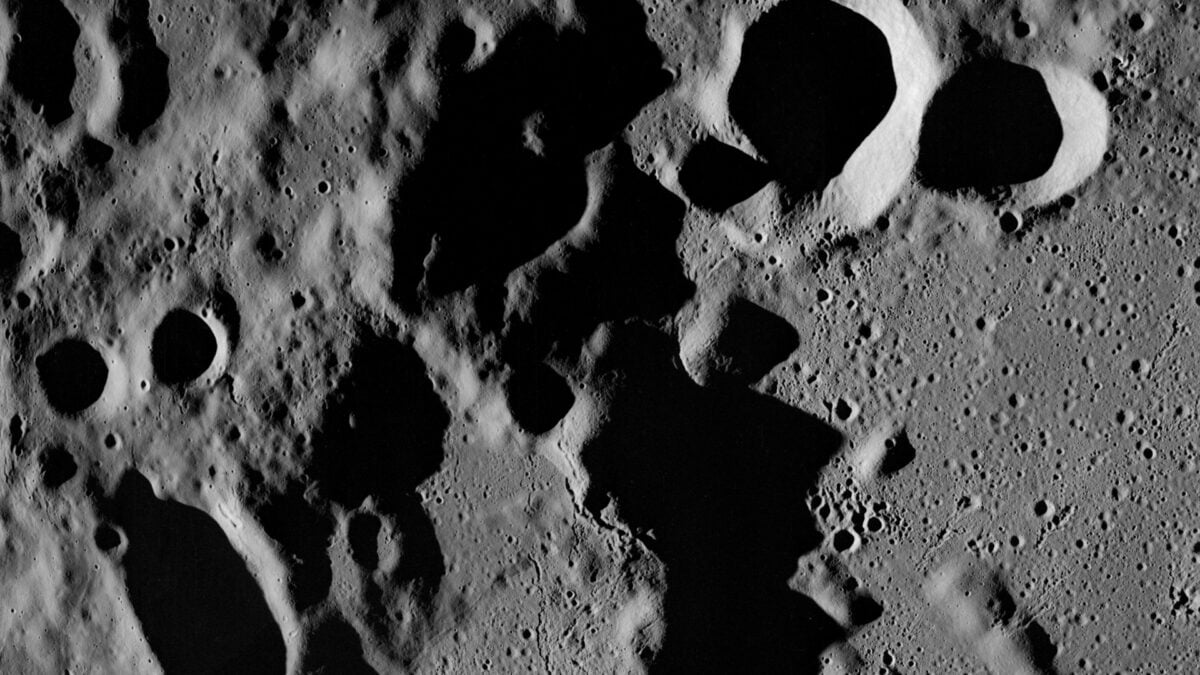
NASA has chosen a Planetary Science Institute (PSI) proposal to investigate the Marius Hills Pit (MHP) on the Moon’s near‑side, assessing whether the 34‑45 m deep depression opens onto a network of lava‑tube caves that could shelter future astronauts.
What happened
The planned mission will launch a lander and rover equipped with ground‑penetrating radar, seismic sensors and a gravimeter to conduct subsurface surveys and capture high‑resolution images of the pit’s walls. PSI is collaborating with Blue Origin’s Honeybee Robotics and the Norwegian Space Agency to build the payload.
What the reports add
According to Independent, the pit measures roughly 65 × 90 m and may be linked to volcanic activity that occurred 3.8 to 3 billion years ago. Researchers hope the instruments will reveal the pit’s origin, the region’s volcanic history and the presence of a lava tube extending from the pit.
What was said
Project senior scientist Than Putzig told Independent, “These methods together will allow us to get a much better understanding of subsurface properties – including the anticipated detection of a lava tube extending away from the Marius Hills pit.”
How it came about
The initiative follows earlier NASA lunar observations, including recent imaging of the waning crescent Moon (Felo coverage), and builds on growing interest in using natural lunar caves for radiation and micrometeorite protection.
Key facts
- NASA selected a PSI project to probe the Marius Hills Pit for potential lava‑tube shelter. (independent.co.uk)
- The mission will use a lander and rover with ground‑penetrating radar, seismic sensors and a gravimeter. (independent.co.uk)
- MHP is about 34‑45 m deep and 65 × 90 m across, formed by ancient volcanic activity. (independent.co.uk)
- PSI is working with Blue Origin’s Honeybee Robotics and the Norwegian Space Agency on the payload. (independent.co.uk)
- Project senior scientist Than Putzig said the instruments will help detect a lava tube extending from the pit. (independent.co.uk)
Sources
- [1] independent.co.uk — originally reported as “Strange hole found on moon could lead to future astronaut shelter”