Brief
Lab experiments show freezing speed shapes chemical diversity of Enceladus ice grains
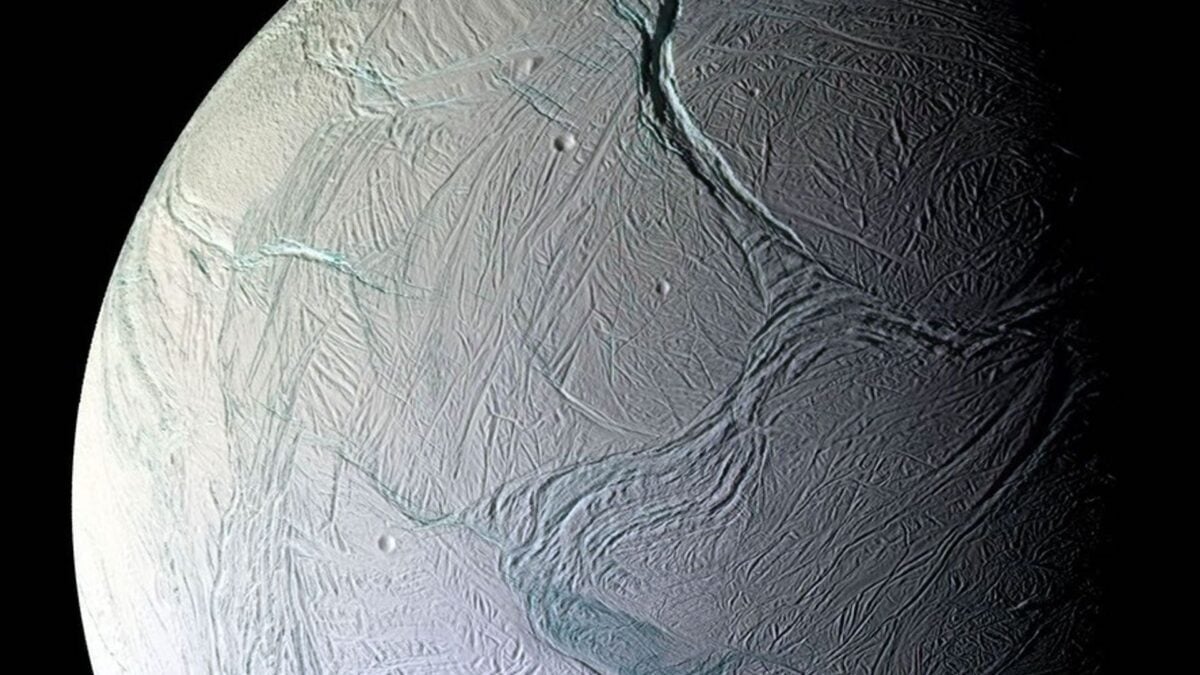
Experiments by ELSI suggest that the rate at which ocean droplets freeze on Enceladus determines the chemical makeup of the ice particles ejected into space.
By Felo News Desk · Published
Researchers at the Earth-Life Science Institute (ELSI) in Tokyo recreated droplets of Enceladus‑like ocean water and discovered that the speed of freezing controls how salts are distributed, offering a laboratory explanation for the chemically diverse ice grains measured by Cassini.
What happened
Using droplets about 200 µm across, the team froze them under two regimes: slow cooling at roughly 10 K per minute or faster cooling. Slow‑frozen droplets showed segregation of salts into distinct regions, while fast‑frozen droplets remained more homogenous. When the frozen droplets break apart, they can produce much smaller ice grains with markedly different compositions.
What the reports add
ScienceDaily reported that the study examined 961 mass spectra of “Type 3” salt‑rich grains collected by Cassini’s Cosmic Dust Analyzer between 2004 and 2017, noting that some grains were rich in sodium chloride while others contained carbonates, phosphates or potassium chloride. The new lab work links this diversity to freezing dynamics, a detail not covered in earlier Cassini analyses.
What was said
"What surprised us was that the diversity seen by Cassini could emerge from droplets originating from essentially the same ocean water," said Professor Yasuhito Sekine of ELSI, as quoted by ScienceDaily.
How it came about
The findings build on earlier Felo News coverage of Enceladus, including a September 28 article on microbes surviving in simulated Enceladus ocean (see "Microbes from Earth Survive in Simulated Enceladus Ocean"), which highlighted the moon’s salty, alkaline ocean as a target for life‑search experiments.
Key facts
- Slow freezing (~10 K per minute) causes salts in Enceladus‑like droplets to separate into distinct regions. (sciencedaily.com)
- Fast freezing keeps salts more evenly mixed within the droplets. (sciencedaily.com)
- Cassini’s Cosmic Dust Analyzer measured 961 mass spectra of salt‑rich ice grains from Enceladus between 2004 and 2017. (sciencedaily.com)
Sources
- [1] sciencedaily.com — originally reported as “The ice blasting from Saturn's moon Enceladus is stranger than scientists realized”