Brief
NASA’s Chandra X‑ray Observatory explains ‘Treble Clef’ galaxy cluster collision
Astronomers used X‑ray and radio data to identify a supermassive black‑hole outburst and a subsequent galaxy‑cluster merger as the cause of the Treble Clef structure.
By Felo News Desk · Published
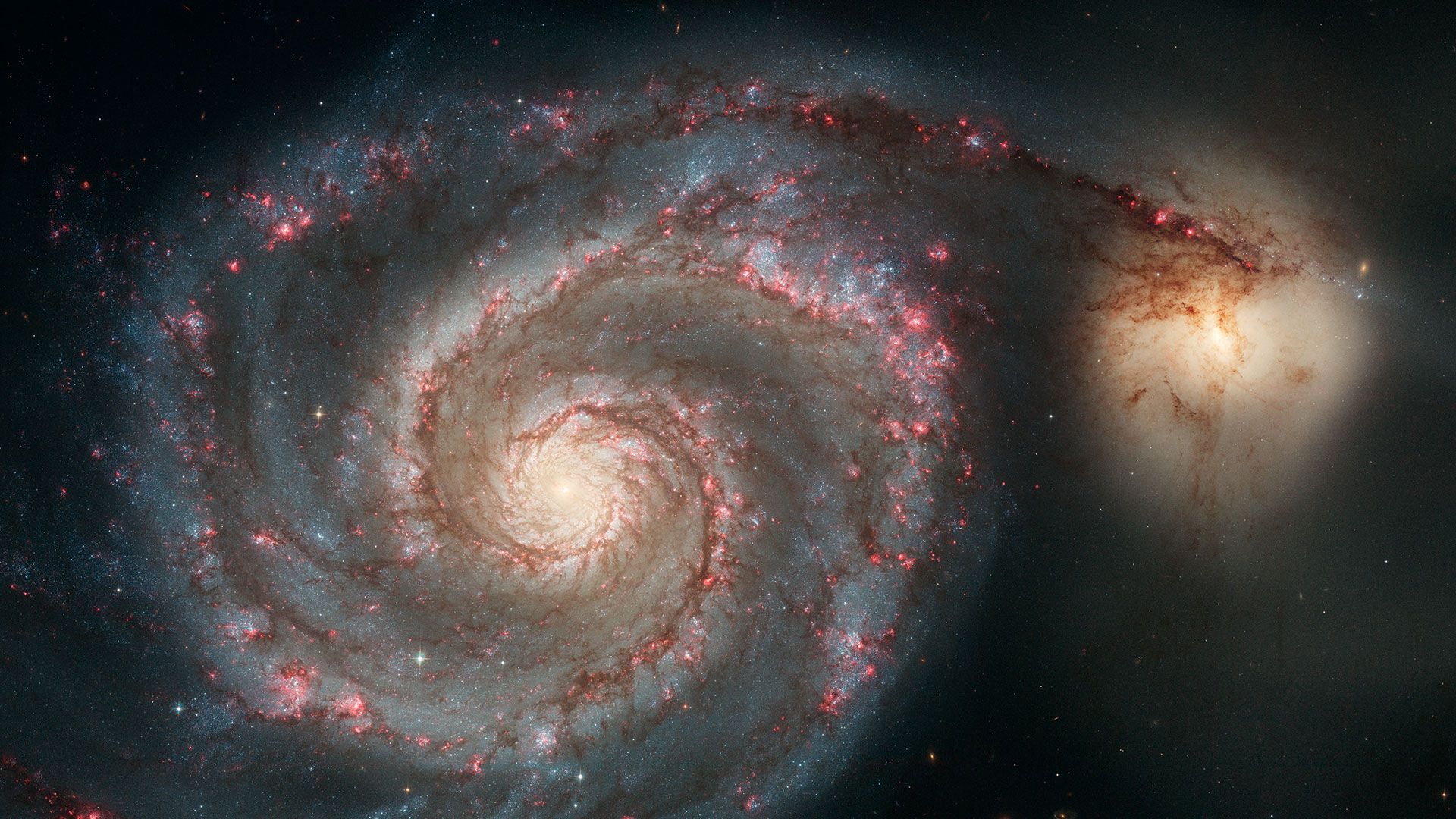
A team of astronomers led by Andrea Botteon of Italy’s National Institute for Astrophysics (INAF) used NASA’s Chandra X‑ray Observatory together with the German eROSITA telescope to investigate a radio formation nicknamed the “Treble Clef” because of its resemblance to the musical symbol. The study, published in the journal Astronomy & Astrophysics on 14 October 2026, concludes that the structure resulted from a two‑stage process: an early outburst from a supermassive black hole followed by the collision of two galaxy clusters.
What happened
The Treble Clef lies behind the Milky Way’s plane, making it difficult to observe in visible light. By combining X‑ray data from Chandra and eROSITA, radio observations from the LOw Frequency ARray (LOFAR) in Europe, and infrared images from the United Kingdom Infrared Telescope, researchers mapped the hot, multimillion‑degree gas and the radio emission that outline the formation. The X‑ray images show diffuse hot gas indicating a galaxy cluster, while the radio data reveal the distinctive clef shape.
What the reports add
The NASA release details a novel image‑processing technique that subtracts a symmetrical oval model of the cluster’s hot gas, leaving residual emission that highlights the brightest regions on the left and right of the clef. This residual pattern supports the interpretation of a merger between two clusters, a detail not previously reported in other outlets.
What was said
Andrea Botteon, leading the study, described the first stage as “an earlier outburst from a supermassive black hole in the cluster’s centre drove clouds of charged particles and magnetic fields away at close to the speed of light,” creating bright radio waves that later faded. The second stage, according to the authors, involved the collision of the two clusters, which re‑energised the radio‑emitting clouds and may have generated shock waves similar to sonic booms.
How it came about
The investigation builds on earlier NASA imaging projects, such as the Hubble “smile” galaxy‑cluster image published on 12 October 2026 (Felo coverage). Both efforts illustrate how multi‑wavelength observations can reveal hidden structures behind the Milky Way’s dust and gas. The current study demonstrates the value of combining X‑ray, radio, and infrared data to disentangle complex cosmic events.
Key facts
- The Treble Clef formation is caused by an outburst from a supermassive black hole followed by a galaxy‑cluster merger. (nasa.gov)
- Chandra and eROSITA X‑ray telescopes detected hot, diffuse gas indicating a galaxy cluster at the Treble Clef location. (nasa.gov)
- Radio data from LOFAR showed the clef‑shaped emission, while infrared data from the UKIRT contributed to the composite image. (nasa.gov)
- Researchers used a technique that removed a symmetrical oval model of the hot gas to highlight residual X‑ray emission. (nasa.gov)
- The study was led by Andrea Botteon of INAF and published in Astronomy & Astrophysics on 14 October 2026. (nasa.gov)
Sources
- [1] nasa.gov — originally reported as “NASA’s Chandra Breaks Down ‘Treble Clef’s’ Galaxy Cluster Collision”