Brief
Tesla Roadster 2 uses fans and thrusters to cling to walls and briefly lift off
The prototype combines fan‑generated low pressure and SpaceX thrusters to achieve feats that defy ordinary car physics.
By Felo News Desk · Published
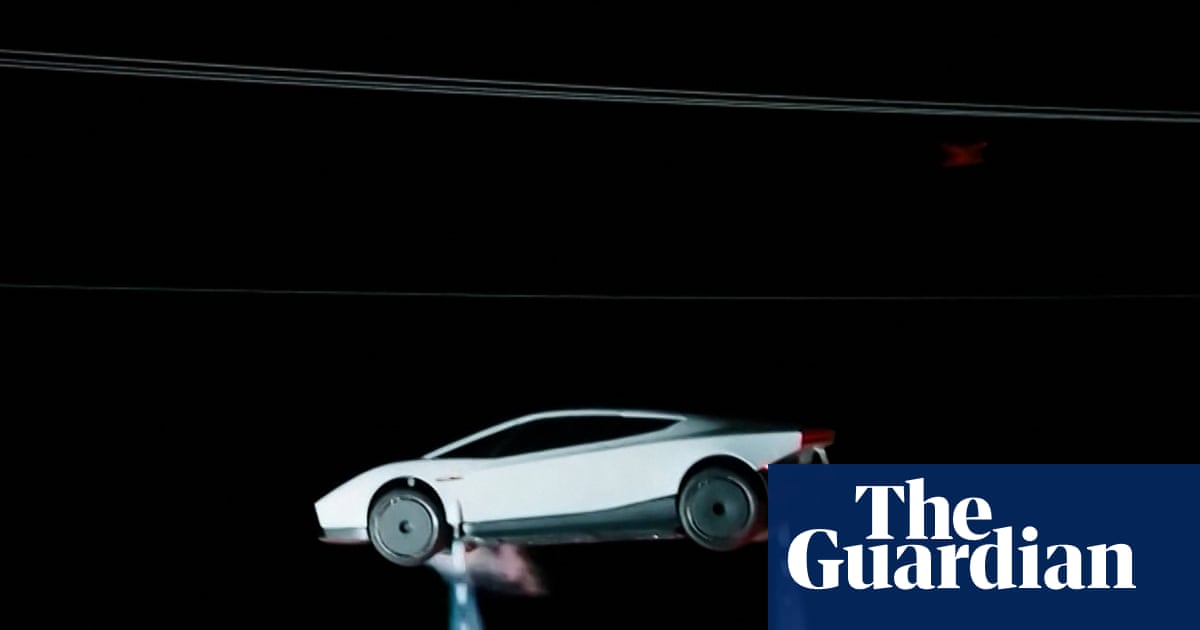
Elon Musk unveiled Tesla’s Roadster 2 prototype last week, demonstrating a vehicle that can drive upside‑down on a vertical ramp, jump over a line of Tesla models and lift off the ground for a few seconds. Wired analysed the physics behind those stunts, attributing the wall‑clinging to a fan‑based suction system and the brief flight to compressed‑air thrusters.
What happened
During a demonstration at SpaceX’s Texas test site, the Roadster 2 accelerated to 0‑60 mph in under one second, then used side‑mounted fans to force air out from beneath the car. The resulting low‑pressure zone acted like a vacuum, increasing the normal force between the tires and a vertical ramp. By boosting the normal force, the static‑friction force rose enough to counteract gravity, allowing the car to remain glued to the wall upside‑down. After the wall run, rear thrusters ignited, propelling the driver‑less prototype into a short, controlled hop before landing back on the ground.
What the report adds
Wired notes that ordinary rubber‑on‑asphalt friction, with a coefficient around 0.6, would only support an incline of about 31°, far short of vertical. Even a high‑performance coefficient of 0.9 caps the angle at roughly 42°. The article explains that the fan system effectively raises the normal force, bypassing the static‑friction limit. It also clarifies that the lift‑off is achieved with compressed‑air thrusters rather than rocket engines, limiting the duration of flight to a few seconds.
What was said
Wired’s author writes, “I don’t think you should ever do this, but this feature of the Roadster 2 can actually improve performance on normal roads,” and adds, “The answer is to increase the normal force—and, by extension, the frictional force.” The piece attributes the static‑friction model and coefficient values to physicist Rhett Allain, whose diagrams illustrate the forces involved.
How it came about
The Roadster 2 follows earlier Tesla announcements about a “flying” Roadster, including reservation openings on 2026‑10‑16 (Tesla opens reservations for flying Roadster with delivery caveat) and a live demo of rocket‑thruster capabilities (Tesla unveils SpaceX‑thruster Roadster demo in Texas). Those earlier reports highlighted the vehicle’s sub‑one‑second 0‑60 mph acceleration and the regulatory uncertainties surrounding a road‑to‑air vehicle.
Key facts
- The Roadster 2 uses fans to create low pressure under the car, increasing normal force and static friction to cling to a vertical wall. (wired.com)
- Compressed‑air thrusters provide a brief lift‑off lasting only a few seconds. (wired.com)
- Static friction on rubber‑asphalt normally caps climbable angles at about 31° (μ≈0.6) or 42° (μ≈0.9). (wired.com)
Timeline
- 2026-10-15 — Roadster 2 prototype demo with wall‑climbing and lift‑off in Texas
- 2026-10-16 — Tesla opens reservations for the flying Roadster
- 2026-10-16 — SpaceX‑thruster Roadster demo announced
Sources
- [1] wired.com — originally reported as “The Physics Behind Tesla’s Flying Roadster”