Brief
Vienna team creates first self‑stabilising nuclear clock
The prototype uses thorium nuclei and a laser‑stabilised crystal to keep time without external atomic references.
By Felo News Desk · Published
Scientists at TU Wien and PTB Braunschweig have demonstrated the world’s first self‑stabilising nuclear clock, operating continuously for more than 24 hours without external correction, ScienceDaily reported on 11 October 2026.
What happened
The device relies on a crystal containing thorium‑229 atoms. A laser excites the nuclei, whose uniquely low‑energy transition can be driven with light. By feeding the nuclear response back to the laser, the system locks the laser frequency to the nuclear transition, creating a stable time reference that does not need a conventional atomic clock for calibration. The team showed the clock maintained its frequency stability for over a day in unattended operation.
What the reports add
ScienceDaily notes that earlier prototypes required an external optical atomic clock to keep the nuclear transition accurate. The new design, however, integrates the thorium crystal and laser in a closed loop, achieving autonomous stability. The article also highlights that the breakthrough follows a 2024 experiment in which Prof Thorsten Schumm’s group first excited thorium nuclei with laser light, confirming the feasibility of a nuclear reference.
What was said
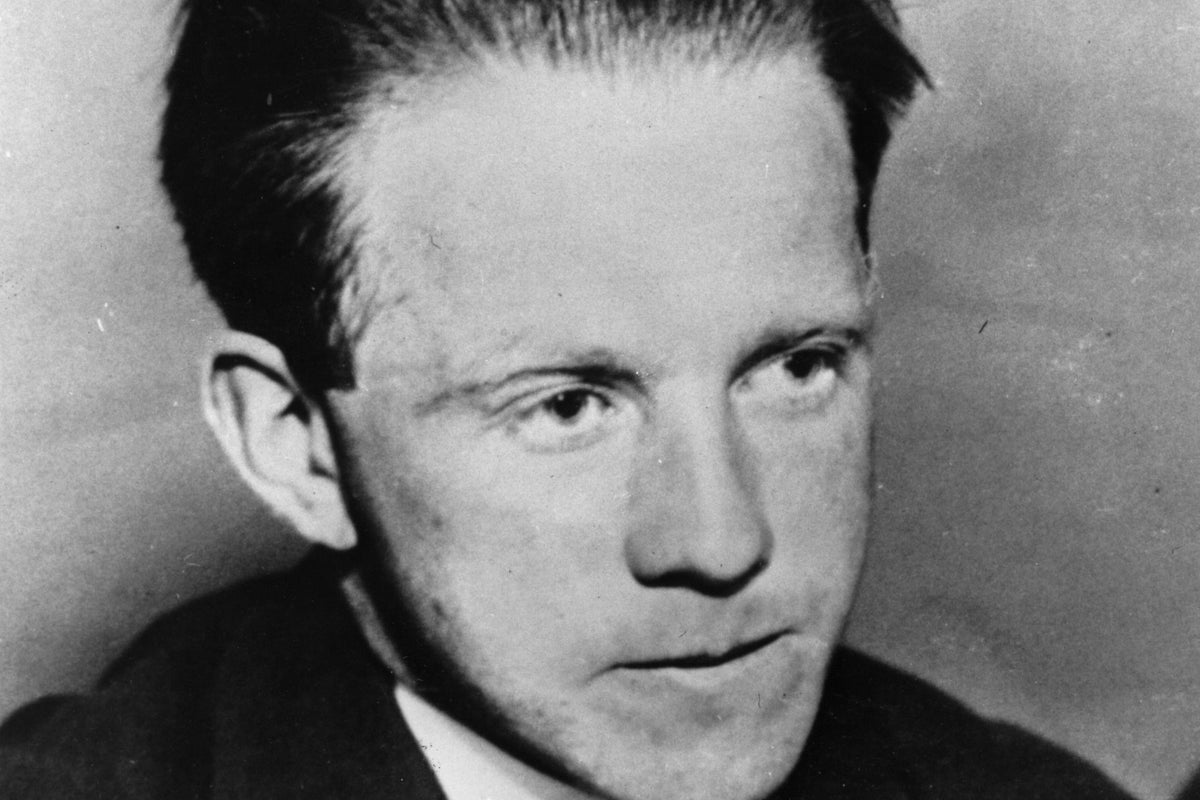
Prof Thorsten Schumm explained, “What you really want is a self‑stabilising nuclear clock. The basic idea is simple: you have a laser and you have thorium. The laser changes the energy state of the thorium nuclei, and the thorium nuclei are used to stabilize the frequency of the laser.” The quote is attributed to ScienceDaily.
How it came about
The research builds on more than a decade of work on nuclear‑based timekeeping. In April 2024, Schumm’s team and Prof Ekkehard Peik’s group at PTB identified the thorium‑229 transition experimentally. Later that year they linked the thorium excitation to an optical atomic clock, proving the concept of a nuclear reference. The current breakthrough adds the missing self‑stabilising loop, moving the technology closer to practical applications that could surpass the precision of today’s best optical atomic clocks.
Key facts
- The prototype nuclear clock operated continuously for over 24 hours without external correction. (sciencedaily.com)
- The clock uses a thorium‑229 crystal and a laser that locks to the nucleus’s low‑energy transition. (sciencedaily.com)
- Researchers from TU Wien and PTB Braunschweig led the development, with Prof Thorsten Schumm as a key figure. (sciencedaily.com)
Sources
- [1] sciencedaily.com — originally reported as “Scientists build a nuclear clock that could make atomic clocks obsolete”