Brief
Sea cucumber fragments keep growing for years in seawater, study finds
Scientists tracked cut sea cucumber pieces that remained alive and continued to heal for more than three years in the ocean.
By Felo News Desk · Published
Scientists from Memorial University of Newfoundland and collaborators observed that detached fragments of the cold‑water sea cucumber Psolus fabricii continued to heal, reorganize and grow for over three years when kept in flowing natural seawater, according to a study published in Science Advances.
What happened
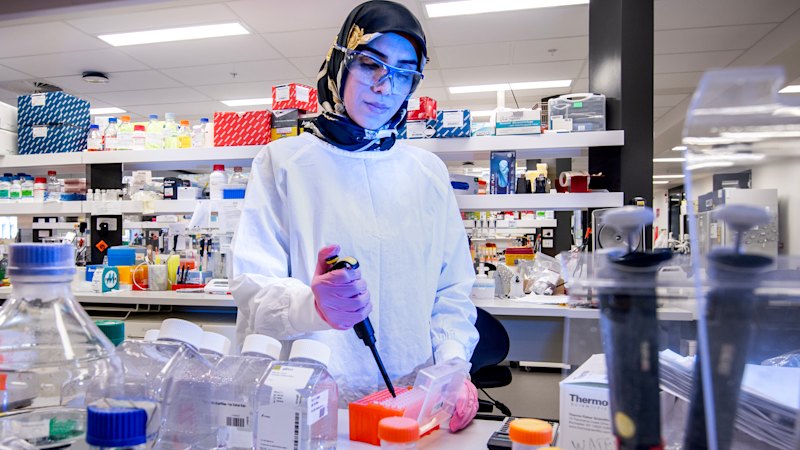
The research team removed tissue from the tube feet, main body and tentacles of three individual sea cucumbers and placed each explant in a continuous flow of seawater collected from their natural habitat. Over the course of more than three years, the fragments retained their original structure, displayed independent movement, and showed signs of immune activity and tissue reorganization. Microscopic analysis using 5‑bromo‑2′‑deoxyuridine staining revealed areas of active cell division within the explants.
What the reports add
The article notes that, unlike conventional cell cultures that require sterile, axenic conditions, the sea cucumber fragments thrived in a microbially diverse environment. The researchers propose that the seawater supplied amino acids directly, allowing the mouthless tissue to obtain nutrients. The study highlights that natural seawater, despite its high bacterial load, acted as a feeding medium that supported long‑term tissue survival.
What was said
"Natural seawater is just about the most microbially diverse, least clean approach we could take experimentally," senior research scientist Rachel Sipler of Bigelow Laboratory for Ocean Sciences told Science Daily. "Yet, that rich environment full of bacteria and all this organic matter was actually feeding them and allowing this tissue to heal and grow."
How it came about
The project built on earlier work on immortal cell lines such as HeLa, which have been kept alive since the mid‑20th century under strictly controlled conditions. By contrast, the sea cucumber explants demonstrated that complex marine organisms can sustain tissue regeneration without sterile media, opening new avenues for studying long‑term regeneration in a natural setting.
Key facts
- Detached sea cucumber fragments survived and grew for more than three years in natural seawater. (scitechdaily.com)
- The study used tissue from tube feet, main body and tentacles of three Psolus fabricii individuals. (scitechdaily.com)
- Researchers observed immune activity, tissue reorganization and cell division in the explants. (scitechdaily.com)
- Rachel Sipler of Bigelow Laboratory said the seawater provided amino acids that fed the tissue. (scitechdaily.com)
- Findings were published in the journal Science Advances. (scitechdaily.com)
Sources
- [1] scitechdaily.com — originally reported as “Scientists Discover Groundbreaking Clues to Tissue Regrowth and “Immortality” in the Ocean”