Brief
Tsinghua researcher accused of AI‑enhanced video in Nikon microscopy contest
Dr Ning Xu says AI was only used to colour a microscopy film that won Nikon Small World in Motion, sparking scientific backlash.
By Felo News Desk · Published
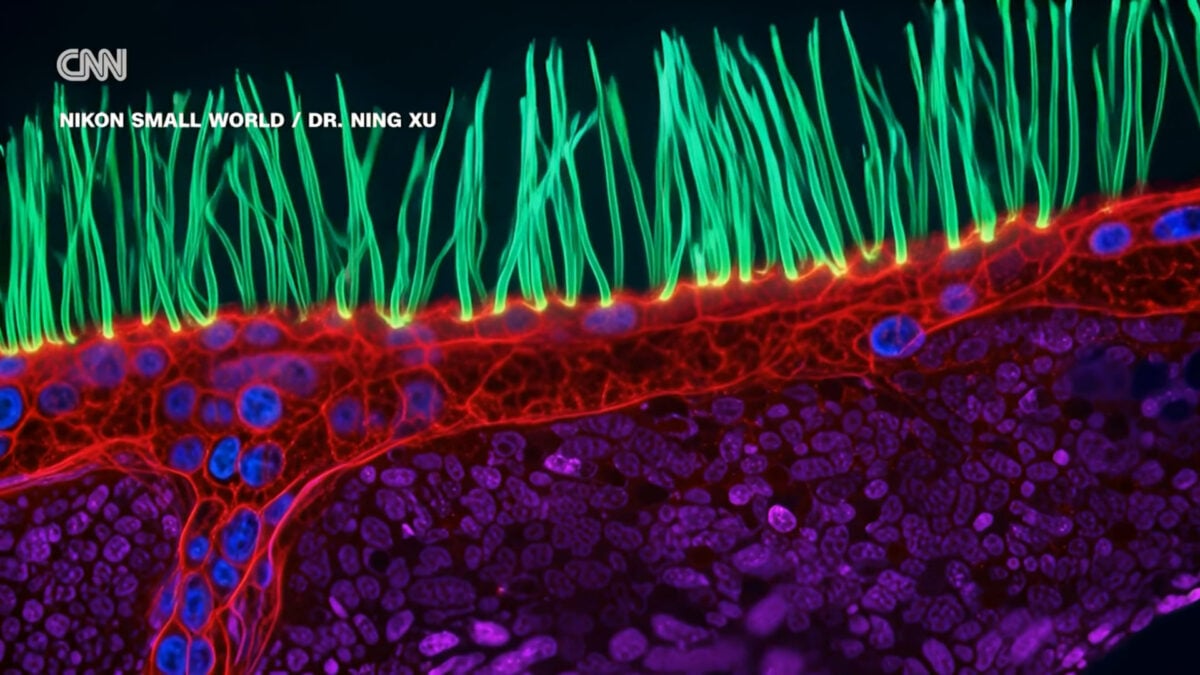
Dr Ning Xu, a Tsinghua University researcher, won the top prize in the 2026 Nikon Small World in Motion competition for a short film showing cilia moving in the airways of a child with primary ciliary dyskinesia (PCD). After the result was announced in September, scientists questioned the video’s authenticity, noting the bright‑green colour of the hair‑like structures and a possible Google SynthID watermark.
What happened
The Nikon Small World in Motion contest, which awards $3,000 for the best microscopic video, announced Xu’s entry as the winner. Critics quickly pointed out that the cilia’s motion appeared "unnatural" and that the structures seemed to pop in and out of view. Ian Donovan, a doctoral student at UT Southwestern Medical Center, said one version of the film displayed a SynthID watermark, a marker used for Google‑generated AI content. Edward Phelps, an associate professor at the University of Florida, observed similar visual anomalies.
What the reports add
The Daily Mail reports that while Xu denied any AI involvement in creating the experimental footage, he admitted to using AI after the fact to recolour the grayscale data bright green, stating the tool helped distinguish structures with similar morphology. He emphasized a distinction between using AI for scientific claims and for visual communication.
What was said
"AI was applied afterwards to the reconstructed grayscale data to distinguish and colour structures with similar morphology," Xu wrote online. He added, "For me, the important distinction is between using an image to make a scientific claim and using visualization to communicate the beauty of scientific data. Both can have a place, as long as we are clear about which is which." Nikon said it has launched an investigation and is "carefully re‑reviewing the" entry.
How it came about
The controversy follows previous disputes over scientific visualisation, echoing earlier Felo News coverage of misrepresented scientific media. Nikon’s prompt review reflects growing scrutiny of AI‑generated content in research publishing.
Key facts
- Dr Ning Xu won the 2026 Nikon Small World in Motion contest with a video of cilia in a child with primary ciliary dyskinesia. (dailymail.co.uk)
- Xu admitted using AI to recolour the video bright green but denied AI created the footage itself. (dailymail.co.uk)
- Nikon has opened an investigation and is re‑reviewing the winning entry. (dailymail.co.uk)
Sources
- [1] dailymail.co.uk — originally reported as “Huge row over microscope photograph contest winner's 'AI fake' video”