Mercury may be shrinking faster than scientists expected, study reveals
Scientists have found that Mercury may be shrinking faster than previously believed, losing up to 14 miles in diameter. The discovery comes from re‑examining surface roughness and impact debris that may conceal contraction features. Upcoming BepiColombo laser measurements could confirm the extent o…
In a surprising twist to planetary science, a recent study indicates that Mercury, the solar system’s smallest and innermost planet, may be shrinking faster than earlier estimates suggested. Researchers from the German Aerospace Center’s Institute of Space Research have reported that the planet could be losing as much as 14 miles in diameter—an increase of roughly 30% over previous calculations.
How Scientists Re‑evaluated Mercury’s Contraction
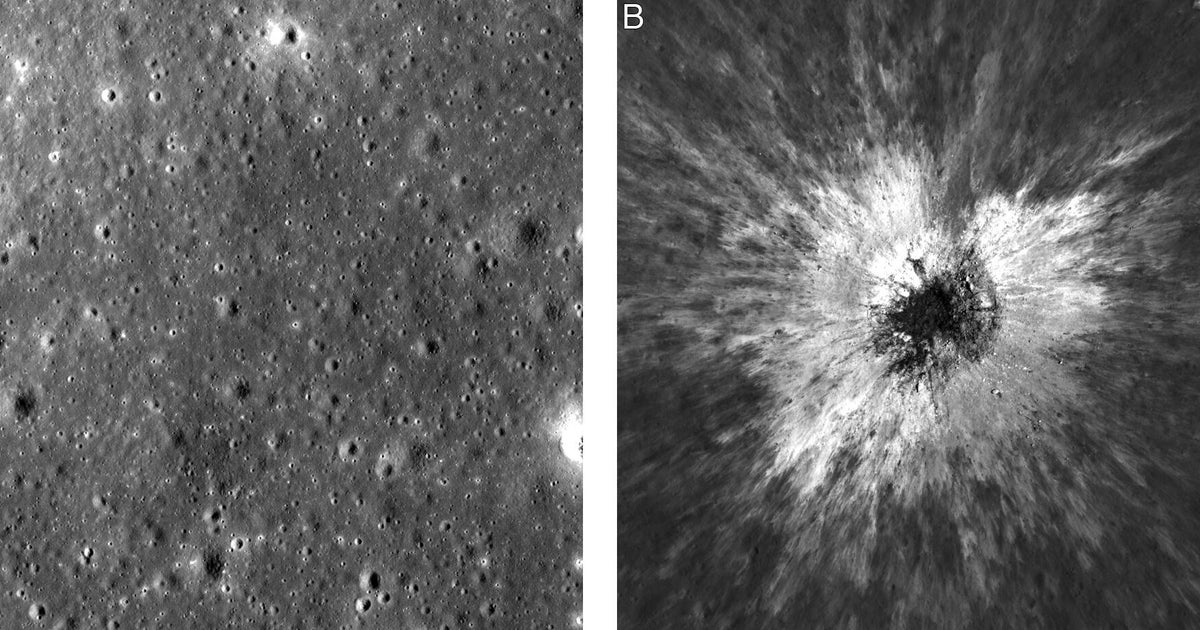
Mercury’s surface is a chaotic mosaic of impact craters, ridges, and ridges that have been reshaped by debris ejected from countless collisions over billions of years. This roughness can mask subtle signs of global contraction, such as wrinkle ridges that form when a planet’s interior cools and contracts. By comparing older maps that highlighted these contraction features with newer, higher‑resolution images that emphasize surface roughness, the team discovered that the roughest regions actually hide fewer visible wrinkles. The missing wrinkles, they argue, are buried beneath layers of impact debris.
To quantify the effect, the researchers used data from NASA’s Messenger spacecraft, which orbited Mercury from 2011 to 2015, and incorporated new topographic information from the European‑Japanese BepiColombo mission. The latter, which entered Mercury’s orbit in November 2026, carries a laser altimeter capable of measuring the planet’s shape with unprecedented precision. By accounting for the obscured contraction features, the team arrived at a revised estimate of Mercury’s shrinkage that could reshape our understanding of the planet’s thermal history.
Implications for Planetary Evolution
Mercury’s rapid cooling and contraction are a natural consequence of its large iron core relative to its size. As the core cools, it contracts, pulling the mantle and crust inward. Over the planet’s 4.5‑billion‑year history, this process has gradually reduced its diameter. The new findings suggest that the contraction may have proceeded more aggressively than previously thought, potentially affecting the timing and distribution of tectonic features such as lobate scarps and wrinkle ridges.
Understanding Mercury’s contraction also provides a benchmark for studying other rocky bodies that experience similar thermal evolution. For instance, the Moon and Mars exhibit signs of global contraction, but the magnitude and timing differ. By refining the contraction rate for Mercury, scientists can better model the thermal and tectonic histories of these worlds.
What’s Next: BepiColombo’s Laser Measurements
As BepiColombo continues its mission, its laser altimeter will deliver high‑resolution shape data that can confirm or refine the new shrinkage estimates. The spacecraft’s instruments will also map the distribution of impact ejecta and surface roughness with greater detail, allowing scientists to isolate contraction features that were previously hidden. If the laser data corroborate the 14‑mile loss, it would represent a significant revision to planetary contraction models.
Lead author Gaku Nishiyama, who is actively involved with the BepiColombo mission, emphasized that the findings are just the beginning. “We are quite excited,” he said in an email, noting that the study brings us closer to understanding Mercury’s true evolutionary path. The research, published in Geophysical Research Letters, opens new avenues for investigating how small, iron‑rich planets cool and reshape over time.
Why This Matters
Accurately measuring Mercury’s contraction is essential for piecing together the planet’s geological history and for comparing its evolution to other terrestrial bodies. The discovery also demonstrates how surface features can mask underlying tectonic processes, highlighting the importance of high‑resolution imaging in planetary science.
Key Takeaways
- Mercury may be shrinking up to 14 miles in diameter, 30% more than previously thought.
- Impact debris on Mercury’s surface can conceal contraction features like wrinkle ridges.
- BepiColombo’s laser altimeter will provide definitive measurements of Mercury’s shape.
- Revised contraction estimates could alter models of Mercury’s thermal and tectonic evolution.
- Findings offer insights applicable to other rocky planets experiencing global contraction.
Frequently Asked Questions
- What causes Mercury to shrink? The planet’s large iron core cools and contracts over time, pulling the mantle and crust inward.
- How does impact debris hide contraction features? Layers of ejecta from craters can bury wrinkle ridges, making them less visible in surface maps.
- Will BepiColombo confirm the new shrinkage estimate? Yes, its laser altimeter is designed to measure Mercury’s shape with high precision, potentially validating the 14‑mile loss.
- Why is Mercury’s contraction important to study? It helps scientists understand the thermal history of small, iron‑rich planets and informs comparative planetology.
Why it matters
The revised contraction rate reshapes our understanding of Mercury’s geological history and offers a benchmark for studying thermal evolution in other rocky planets.
Key points
- Mercury may be losing up to 14 miles in diameter
- Impact debris can conceal contraction wrinkles
- BepiColombo’s laser will verify shrinkage
- Revised estimates affect planetary evolution models
- Findings inform studies of other contracting worlds
Frequently asked questions
What causes Mercury to shrink?
Mercury’s large iron core cools and contracts over time, pulling the mantle and crust inward.
How does impact debris hide contraction features?
Layers of ejecta from craters can bury wrinkle ridges, making them less visible in surface maps.
Will BepiColombo confirm the new shrinkage estimate?
Yes, its laser altimeter is designed to measure Mercury’s shape with high precision, potentially validating the 14‑mile loss.
Why is Mercury’s contraction important to study?
It helps scientists understand the thermal history of small, iron‑rich planets and informs comparative planetology.