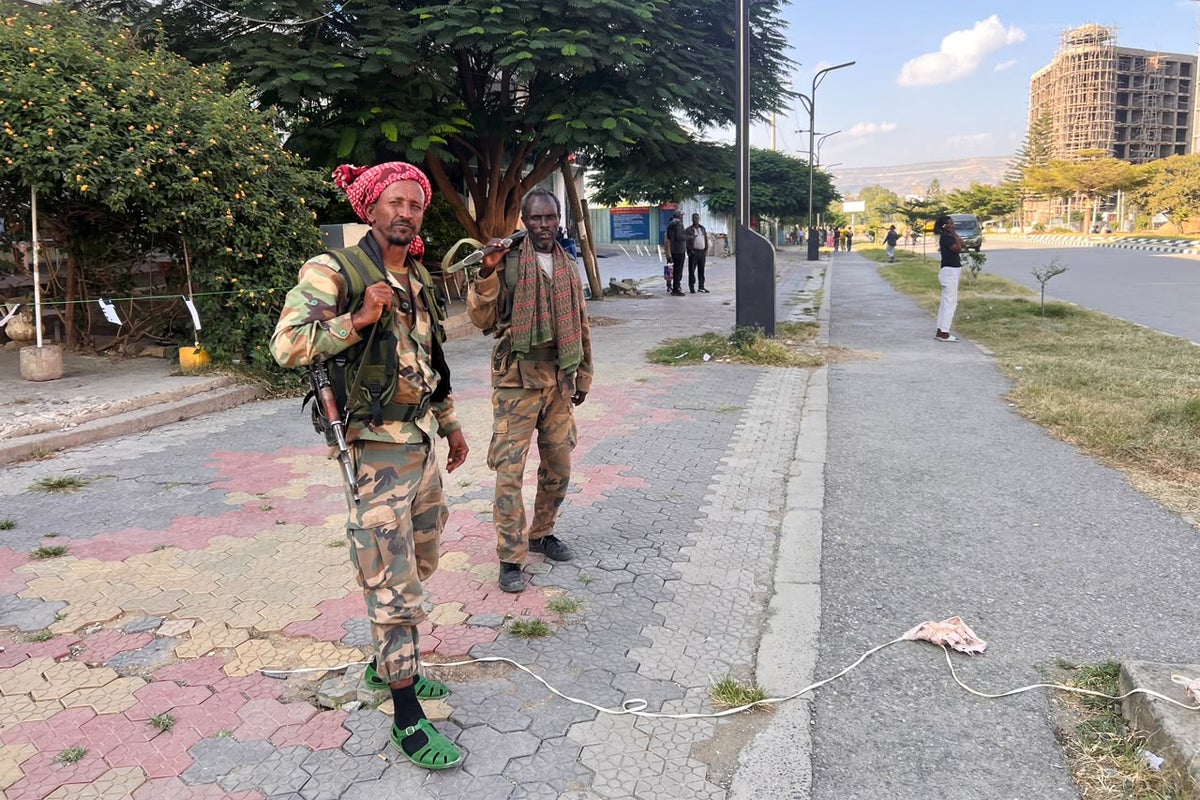
Ethiopia Faces Widening Conflict as Tigray Escalates
The fighting in Ethiopia has broadened from Tigray to neighboring regions as the Tigray People’s Liberation Front (TPLF) reports a new offensive. A coalition of armed groups has formed to oppose the federal government, raising fears of a larger civil war. The conflict now involves federal forces, r…
By Felo News Desk · Published
On Wednesday morning, a senior Tigray People’s Liberation Front (TPLF) official, Abdisalam Balema, warned that a new offensive had begun around southern Tigray. He said the strikes were widespread, but the full extent was still unclear. Within a day, the TPLF described the situation as a “full war” and claimed that federal forces had launched a large‑scale assault involving infantry, mechanised units and drones. The TPLF’s counter‑offensive operations were also underway.
From Local Skirmishes to a National Crisis
The escalation began in the heart of Tigray and quickly spilled into the neighboring Afar and Amhara regions. Federal troops clashed with several armed groups, including the TPLF, the Amhara Fano National Movement, and the Oromo Liberation Army. Air travel was disrupted as Tigrayan forces seized airports, prompting Ethiopian Airlines to suspend flights across the region. Reports also emerged that the TPLF had captured Abala, a district capital in Afar.
Competing narratives about who started the fighting have surfaced. Getachew Reda, a former senior TPLF figure who now advises Prime Minister Abiy Ahmed, blamed the TPLF for launching the attack. In contrast, the TPLF’s own statements accuse the federal government of initiating a “full‑scale offensive.” The dispute over the conflict’s origins reflects deeper political fractures that have been building for years.
The Ethiopian Peoples’ Forces Alliance for Survival
In the days before the escalation, seven armed movements—including the TPLF—announced the formation of the Ethiopian Peoples’ Forces Alliance for Survival. The coalition aims to remove Abiy Ahmed’s government and establish a transitional administration. Its members include the Amhara Fano National Movement, the Oromo Liberation Army, and factions from Somali, Afar and Benishangul‑Gumuz areas.
For almost a year, these groups had been at odds, but the alliance marks a dramatic realignment. The coalition’s statement said the federal government was attacking its member forces on several fronts, framing the conflict as part of a broader struggle that united the alliance. The East African Community (IGAD) called for an end to hostilities and a return to dialogue, while the United Nations expressed concern over the new armed coalition and drone attacks.
Historical Context and Political Realignments
The alliance’s emergence is rooted in the Pretoria agreement that ended the two‑year Tigray war in November 2022. While the deal brought peace between Addis Ababa and the TPLF, it left out Eritrea and Amhara forces, who later fell out with the federal government. Tensions in Amhara over plans to dismantle regional forces sparked open conflict with the federal army in 2023, while relations with Eritrea deteriorated over access to the Red Sea through Eritrean ports.
Within the TPLF, divisions deepened after the settlement. Figures like Getachew Reda defended the agreement, whereas a faction led by Debretsion Gebremichael rejected it. That faction later seized power in Tigray, repaired ties with former enemies, and reshaped alliances that had defined the previous war.
Regional Implications and International Dynamics
Ethiopia’s internal conflict is increasingly entangled with broader Horn of Africa rivalries. Sudan’s army chief Abdel Fattah al‑Burhan has visited Eritrea for talks, while the Rapid Support Forces (RSF) commander Mohamed Hamdan Dagalo has reportedly visited Addis Ababa. Reports suggest RSF fighters are being trained in Ethiopia, and Sudan has accused Ethiopia of allowing drones to be launched from its territory into Sudan.
Several members of the new alliance attended a meeting in Port Sudan in May, described as a “people‑to‑people” initiative. In July, Prime Minister Abiy warned lawmakers that Ethiopia’s sovereignty was not threatened by Eritrea, the TPLF, or Sudan. Balema denied that the alliance received military or logistical support from either Eritrea or Sudan, describing the relationship as purely political contacts.
What Comes Next?
The immediate question is whether Ethiopia has crossed into a wider civil war. The alliance’s formation, the escalation of fighting, and the involvement of regional militias suggest a potential for a national conflict. The government’s response, the alliance’s ability to maintain cohesion, and international diplomatic efforts will shape the trajectory of the crisis. As of now, the situation remains fluid, with unresolved disputes over territorial claims and political objectives.
UN migration data indicates that about three‑quarters of a million people were already internally displaced in Tigray due to the earlier war. The new escalation threatens to increase displacement and humanitarian needs across the country.
Stakeholders—including the federal government, the TPLF, regional militias, and international actors—must navigate a complex web of grievances, alliances, and strategic interests. The outcome will determine whether Ethiopia can avoid a full‑scale civil war or whether the conflict will spiral into a broader regional crisis.
Key facts
- Tigray clashes have spread to Afar and Amhara, involving federal forces and regional militias.
- The Ethiopian Peoples’ Forces Alliance for Survival has formed to oppose the federal government.
- Historical divisions from the Pretoria agreement have reshaped alliances and political strategies.
- International dynamics, including Sudan and Eritrea, influence the conflict’s trajectory.
- The situation remains fluid, with potential for a national civil war and increased displacement.
- UN and IGAD are calling for dialogue and ceasefire to prevent further escalation.
Why it matters
The widening conflict threatens Ethiopia’s stability and could trigger a larger civil war, affecting millions of civilians and regional security. Understanding the alliances and political dynamics is crucial for assessing the risk of escalation.
Frequently asked questions
What is the Ethiopian Peoples’ Forces Alliance for Survival?
It is a coalition of seven armed groups, including the TPLF, Amhara Fano, and Oromo Liberation Army, formed to oppose Prime Minister Abiy Ahmed’s government and establish a transitional administration.
Who is Abdisalam Balema?
He is a member of the TPLF central committee who reported the start of a new offensive in southern Tigray.
How has the conflict spread beyond Tigray?
Fighting has expanded into the Afar and Amhara regions, with federal forces clashing with regional militias and the new alliance.
What role does Sudan play in the conflict?
Sudan’s military leaders have engaged in talks with Eritrea and Ethiopia, and reports suggest RSF fighters are training in Ethiopia, potentially influencing the conflict.
Sources
- [1] aljazeera.com — originally reported as “Fighting widens across Ethiopia as Tigray clashes escalate”