Brief
High Court clears Orange Order’s Drumcree parade after 30 years of bans
After a decade of legal battles, the High Court confirmed the Parades Commission’s decision to let the Orange Order march through Portadown’s Garvaghy Road, reigniting tensions in a region still healing from past conflict.
By Felo News Desk · Published
The Belfast High Court has upheld the Parades Commission’s ruling that the Orange Order may march on Garvaghy Road in Portadown, a decision that ends a 30‑year ban and reignites long‑standing tensions between unionist and nationalist communities.
In a late‑night session on Sunday, Justice Michael Humphreys confirmed that the commission’s reasoning was sound and that the court would not replace its judgment. The ruling follows a series of legal challenges, including an injunction by Justice Patricia Smyth that temporarily halted the march’s notification.
Earlier this week, the High Court had overturned a Parades Commission ruling that had prevented the parade, citing procedural errors. The decision was described by Irish Taoiseach Micheál Martin as “incomprehensible and wrong”. The Orange Order subsequently resubmitted an application with the statutory 28‑day notice, which was again opposed by residents of the predominantly nationalist area.
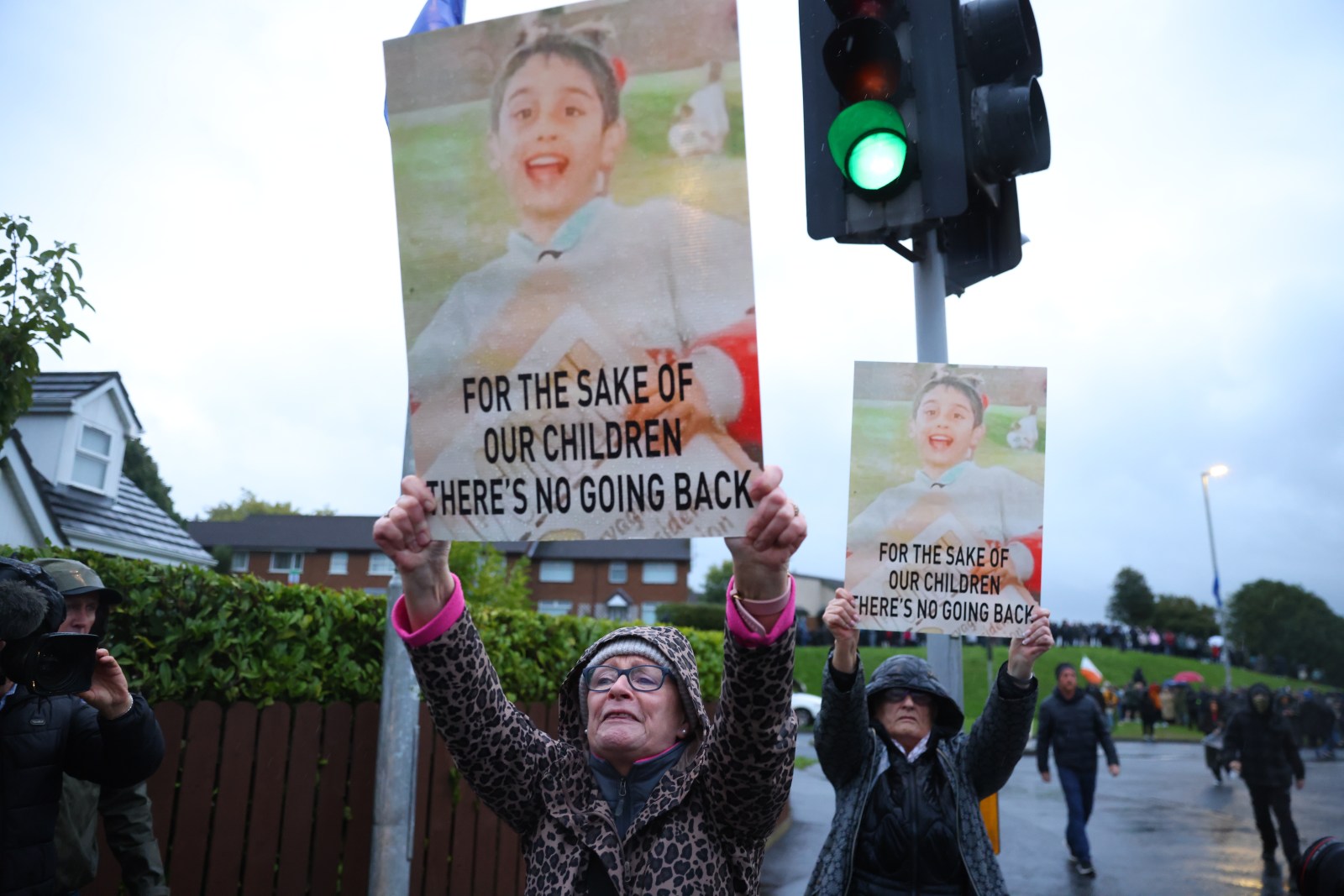
Armoured police vehicles were deployed in Portadown after the court cleared the march, and protests erupted as residents and political leaders voiced their opposition. The incident follows a history of violence and murders in the 1990s when the Orange Order’s marches caused standstills and unrest during the fragile peace process.
Political context has shifted since the 1990s. The first minister is now from Sinn Féin, and the demographic balance in Northern Ireland has changed. Brexit has also altered trade and border arrangements, adding to unionist unease. The decision comes as the Parades Commission has imposed tight restrictions, including a reduced number of participants and a strict timetable.
Key facts
- High Court upheld the Orange Order’s right to march on Garvaghy Road (theguardian.com)
- Justice Michael Humphreys affirmed the Parades Commission’s decision (theguardian.com)
- The ban had lasted 30 years before the High Court overturned it (theguardian.com)
- Armoured police vehicles were deployed in Portadown after the ruling (theguardian.com)
Background
The Drumcree parade has been a flashpoint for sectarian conflict in Northern Ireland since the 1990s. The Parades Commission, established in 1998, had banned the march every year until 2026. The High Court’s recent ruling marks the first time the parade has been allowed on Garvaghy Road in three decades.
Why it matters
The decision threatens to destabilise a region still recovering from decades of sectarian violence, potentially reigniting communal tensions and undermining the fragile peace process.
What happens next
Security forces remain on high alert, and community leaders are calling for calm. The Parades Commission will enforce strict timetable and participant limits for the march.
Sources
- [1] theguardian.com
- [2] standard.co.uk