Brief
Cambridge and Berlin scientists uncover 97‑million‑year‑old magnetic fossils suggesting early animal navigation
The fossils, retrieved from North Atlantic sediments, show structures possibly used to detect Earth's magnetic field, according to a study in Communications Earth & Environment.
By Felo News Desk · Published
Scientists from the University of Cambridge and Helmholtz Zentrum Berlin say they have identified magnetic fossils dating back 97 million years that could represent the earliest known animal navigation system.
What happened
The team examined tiny, spearhead‑shaped magnetofossils recovered from ancient seafloor sediments in the North Atlantic Ocean. Using 3‑D imaging, they observed internal magnetic structures optimized for sensing both the direction and strength of Earth’s magnetic field. The fossils, each no larger than a bacterial cell, are 10 to 20 times larger than magnetic particles found in modern magnetotactic bacteria.
What the reports add
According to the ScienceDaily release, the researchers argue that the morphology of the magnetofossils suggests a biological origin capable of accurate navigation, a claim not previously supported by direct fossil evidence. The article notes that magnetoreception remains poorly understood, with one leading hypothesis involving magnetite crystals acting as microscopic compass needles.
What was said
"Whatever creature made these magnetofossils, we now know it was most likely capable of accurate navigation," Professor Rich Harrison of Cambridge’s Department of Earth Sciences said, as quoted by ScienceDaily. He added, "At just 50‑100 nanometers wide, these particles are the perfect compass needles. If you want to create the most efficient magnetic sense, smaller is better."
How it came about
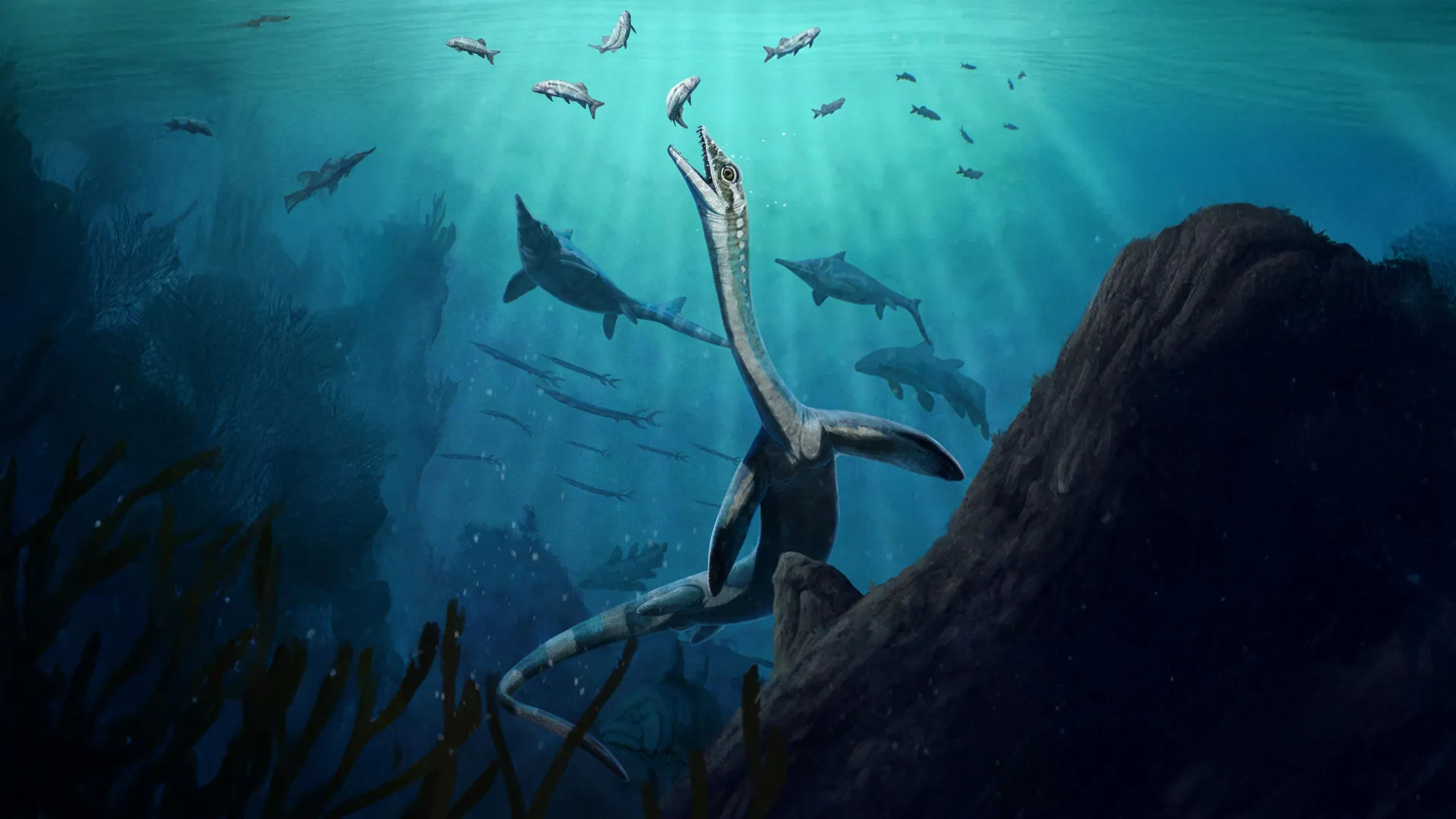
The discovery follows a series of recent fossil studies highlighted by Felo News, including a 245‑million‑year‑old marine reptile with a preserved digestive system and a 125‑million‑year‑old crocodile showing early camouflage. Those pieces illustrate a broader effort to decode ancient biological functions from exceptional fossil preservation. This new work extends that effort to sensory biology, offering a possible glimpse into how modern birds, fish and insects evolved magnetoreception.
Key facts
- Magnetofossils dated to 97 million years were found in North Atlantic seafloor sediments. (sciencedaily.com)
- 3‑D imaging revealed structures optimized for detecting Earth's magnetic field direction and strength. (sciencedaily.com)
- Professor Rich Harrison said the fossils likely belong to an animal capable of accurate navigation. (sciencedaily.com)
Sources
- [1] sciencedaily.com — originally reported as “97-million-year-old fossils reveal the earliest known animal “GPS””