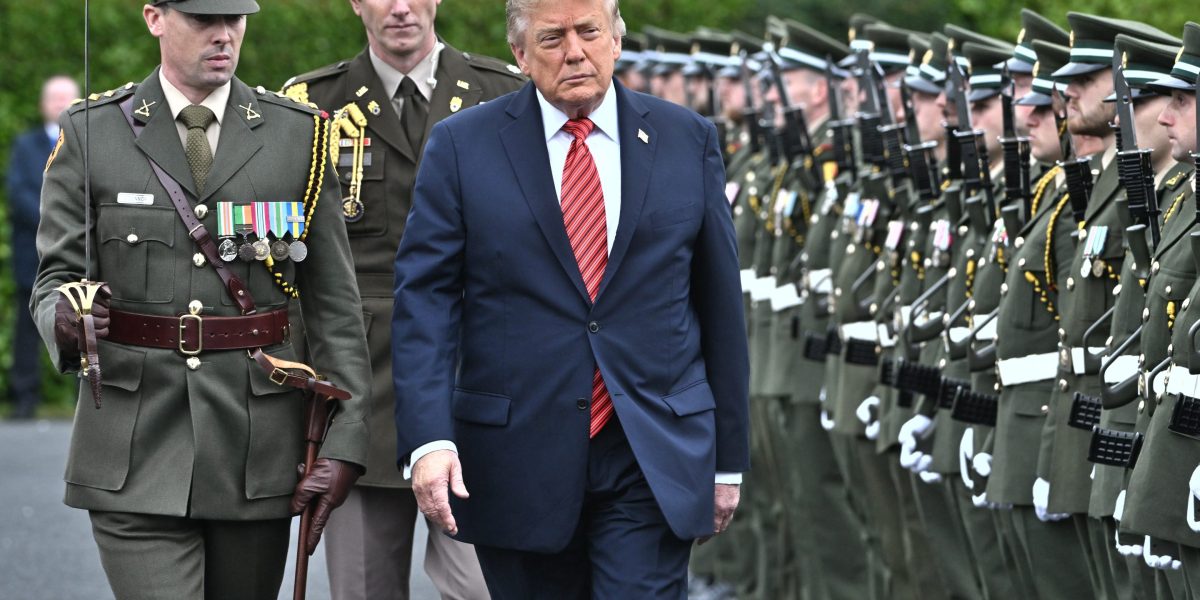
Trump says Iran war will end soon with new deal on the table
President Trump reiterated that Iran is ready for a deal amid ongoing U.S. strikes that have drawn criticism from a UN‑commissioned panel. While the U.S. maintains its campaign as defensive, the panel has found “reasonable grounds” for war‑crime allegations. Oil prices slipped and Gulf states prepa…
By Felo News Desk · Published
President Donald Trump has again told reporters that the United States is close to ending its six‑and‑a‑half‑month war in Iran, insisting that Tehran is ready for a deal. The comments came as a U.N. human‑rights panel released findings that the U.S. may have committed war crimes in two airstrikes that killed at least 178 civilians, including children, in southern Iran. Meanwhile, oil prices fell for a second day after the U.S. Energy Secretary said a damaged Saudi pipeline would be back online soon.
Trump’s call for a deal amid ongoing U.S. strikes
During a midterm campaign stop in North Carolina, Trump told reporters that the U.S. is “almost finished” with Iran and that the Iranian government is “open to a deal.” He added, “Hopefully we’re toward the end of the war.” Trump’s remarks were made in the lead‑up to a meeting with Gulf leaders at the U.N. General Assembly in New York, where the president is expected to outline a post‑war strategy. The meeting also aims to discuss the U.S. plan to secure a post‑war environment in the region.
Trump has repeatedly denied that the U.S. is using back‑channel diplomacy with Iran, insisting that the administration is communicating directly with Iranian officials. He has framed the ongoing campaign as a necessary step to prevent Tehran from acquiring a nuclear weapon, while emphasizing the losses inflicted on Iranian forces.
UN panel finds “reasonable grounds” for war‑crime allegations
A U.N.‑commissioned fact‑finding mission on Iran concluded that there is “reasonable grounds” to believe the United States committed war crimes in two airstrikes on February 28. The strikes targeted a primary school in the southern city of Minab and a sports complex in Lamerd, both located in Hormozgan province. The mission said the attacks caused the deaths of at least 178 civilians, including women and children, and damaged civilian infrastructure.
The panel’s report notes that the U.S. missile that struck the school may have hit the wrong target due to outdated intelligence that incorrectly identified the area as a military installation. The other strike used precision missiles that dispersed tungsten pellets over a residential area, raising concerns about the use of indiscriminate force.
There has been no official response from the White House or the U.S. military to the panel’s findings. The U.S. Central Command has repeatedly denied accusations that it targets civilians, and it has accused Iranian forces of doing so regularly.
Impact on the region and global markets
Oil prices slipped to around $103 a barrel on Thursday, down from $108 earlier in the week, as traders reacted to the U.S. Energy Secretary’s comment that a Saudi oil pipeline damaged by drones would be restored soon. The price drop reflects broader market uncertainty amid the conflict and the potential for disruptions in the Gulf shipping lanes.
In addition to the U.S. strikes, Iranian‑backed Houthi rebels in Yemen have continued to launch attacks on Saudi targets, including telecommunications towers and a town in Taiz province. The rebels claim that Saudi airstrikes have killed civilians, while Saudi officials accuse the Houthis of targeting the holy city of Mecca. The ongoing fighting in Yemen has forced more than 100,000 people to flee their homes, according to the United Nations.
What’s next?
Trump’s upcoming meeting with Gulf leaders at the U.N. General Assembly will likely focus on a post‑war strategy and the possibility of a new deal with Iran. The U.S. has not announced any concrete steps toward a ceasefire, and Iranian officials have consistently denied any interest in a peace agreement unless the U.S. lifts its naval blockade and accepts conditions that reflect the principles of a memorandum of understanding signed in June.
The U.N. panel’s findings may influence international pressure on the U.S., while the ongoing strikes continue to raise concerns about civilian casualties and the legality of the campaign. The conflict’s future remains uncertain, with both sides maintaining a hard line and the international community watching closely for any shift toward a negotiated settlement.
Key facts
- Trump insists Iran wants a deal and the war will end soon
- UN panel cites possible U.S. war crimes in two strikes
- Oil prices fell amid pipeline repair news
- Houthi attacks on Saudi targets continue
- U.S. and Iran remain at odds over post‑war strategy
Why it matters
The clash between U.S. military actions and international legal scrutiny highlights the delicate balance between national security and human rights, with implications for regional stability and global oil markets.
Frequently asked questions
What did the U.N. panel find about U.S. strikes in Iran?
The panel found reasonable grounds to believe the U.S. committed war crimes in two airstrikes that killed at least 178 civilians, including children.
What is the status of the U.S. and Iran negotiations?
Trump says Iran is ready for a deal, but Iranian officials have denied interest in a ceasefire unless the U.S. lifts its naval blockade.
How have oil prices been affected by the conflict?
Oil prices fell to about $103 a barrel as traders reacted to the U.S. Energy Secretary’s comments about repairing a damaged Saudi pipeline.
Sources
- [1] cbsnews.com
- [2] dailymail.co.uk