Brief
Georgia Tech team creates tissue‑based network for implanted devices
The Smart Wireless Autonomous Networking System (SWANS) uses ionic conduction to link injectable implants, avoiding the power and size limits of Bluetooth.
By Felo News Desk · Published
Georgia Tech engineers have demonstrated a networking system that sends electrical signals through human tissue, allowing multiple implants to coordinate without radio antennas, according to a study described by Ars Technica.
What happened
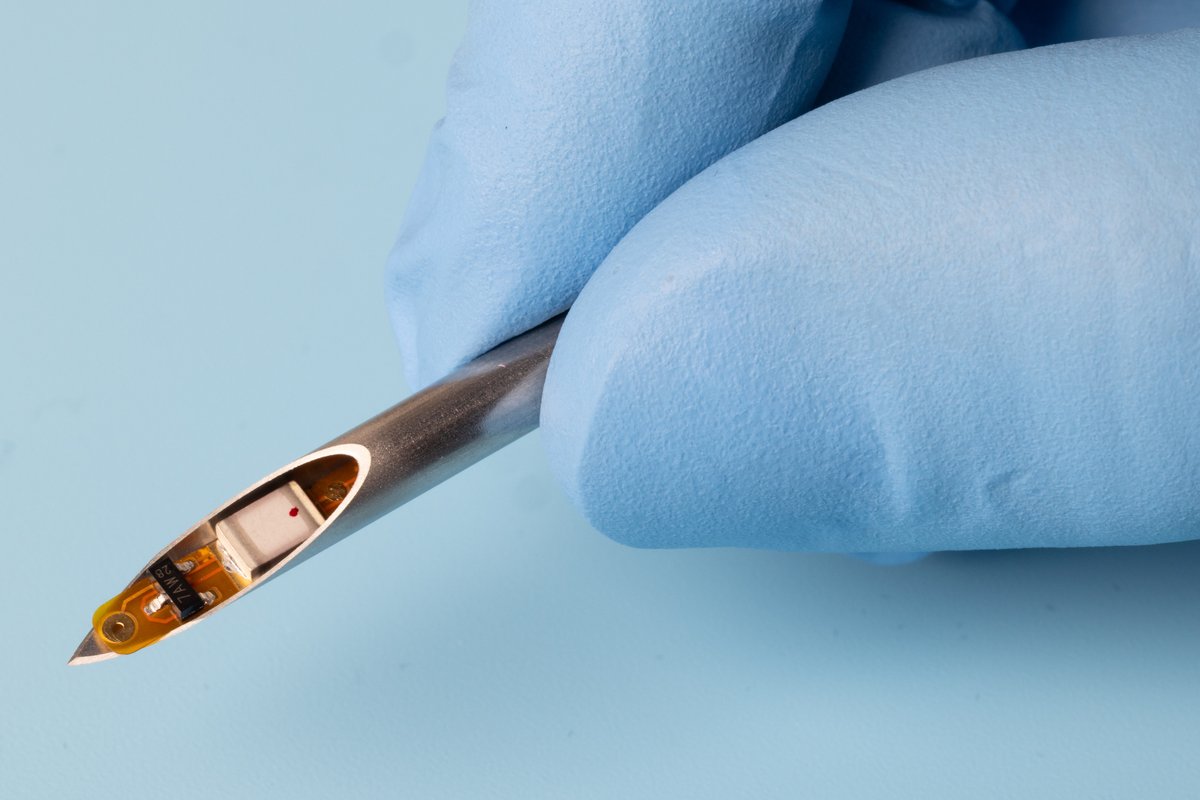
The team built a three‑part architecture called SWANS (Smart Wireless Autonomous Networking System). A flexible wearable hub generates voltage pulses up to 12 V, a patch of stainless‑steel microneedles delivers the pulses into the body, and syringe‑injectable implants receive the signals via two pads, a transistor switch, a battery and a sensor or actuator.
What the reports add
Ars Technica notes that existing implant communication relies on Bluetooth Low Energy or near‑field communication, which can drain an implant’s battery by up to 90 % and lose signal strength after just one centimetre of tissue. By contrast, SWANS mimics the nervous system’s ionic conduction, using sodium and potassium ions to propagate voltage differences through ordinary tissue.
What was said
"If you want an implant to remain in an active state such that it can respond within milliseconds, it’s very difficult to do that with the Bluetooth system," said Alex Abramson, a Georgia Tech engineer and co‑author of the study.
"Bluetooth and near‑field communication are attenuated quite a lot in the tissue," Abramson added, explaining the signal‑loss problem.
How it came about
The concept builds on earlier FDA‑cleared devices like the Abilify MyCite pill, which uses ionic conduction to signal a skin patch. Unlike those two‑device links, SWANS aims to connect many implants, a development first reported by Felo News on 29 September 2026 in the article Tiny Implanted Devices Use Body Tissue to Communicate.
Key facts
- SWANS uses ionic conduction through body tissue to link implants (arstechnica.com)
- Bluetooth components can cut an implant’s battery life by up to 90 % (arstechnica.com)
- Radio signals attenuate sharply after about one centimetre of tissue (arstechnica.com)
- The system’s wearable hub can emit voltage pulses up to 12 volts (arstechnica.com)
Sources
- [1] arstechnica.com — originally reported as “A local network of implants uses your body as the wiring”