Pompeii eruption provides new benchmark for geological dating
Scientists calibrated argon‑argon dating with the 79 CE Vesuvius eruption, boosting precision for dating volcanic rocks worldwide.
By Felo News Desk · Published
Researchers from the Berkeley Geochronology Center, UC Berkeley, and the University of Padua have used the 79 CE eruption of Mount Vesuvius that buried Pompeii as a calibration point for argon‑argon dating, according to reports from SciTechDaily and ScienceDaily.
What happened
The eruption, recorded by Pliny the Younger and dated to August 24, 79 CE, serves as a rare historical anchor for testing radiometric clocks. By aligning the argon‑argon method with this precise date, the team achieved a precision of 0.7 % and an accuracy of 0.4 % when dating eight sanidine samples, a result slated for publication in Science Advances.
What the reports add
- The refined technique could sharpen timelines for past eruptions near densely populated areas such as Naples, Mexico City and Yogyakarta, Indonesia.
- It may also help verify other dating methods, including carbon‑14 dating of organic material and uranium‑lead dating of rocks that are billions of years old.
- The researchers dated the eight sanidine samples to 1,938 ± 13 years before they were measured in 2025; based on the historical record the minerals should be 1,946 years old.
What was said
“If you want to put together the eruptive history of a volcano in relatively recent time, precision and accuracy really count,” said study leader Paul Renne, a Berkeley professor in residence of earth and planetary science and director of the independent Berkeley Geochronology Center. “The study shows that you can achieve that kind of highly useful precision and accuracy into the historical realm.”
“This lets us more precisely infer causality between events in the geologic record, for example, a meteor impact structure and a mass extinction,” Renne added.
How it came about
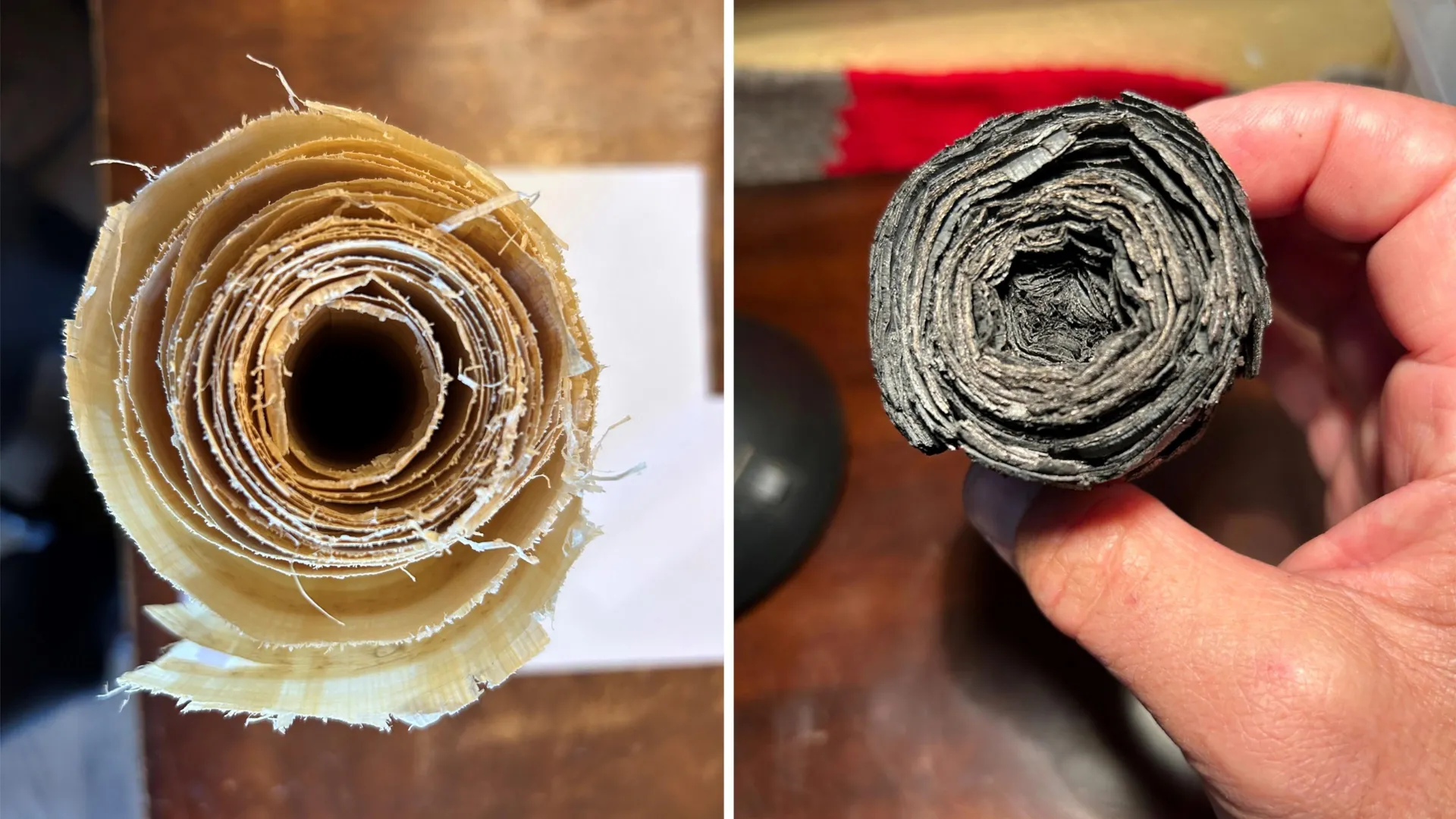
Felo News previously covered related work on Vesuvius‑related artifacts, including the use of lead‑enhanced ink to read carbonised scrolls (Scientists Unlock 2,000‑Year‑Old Vesuvius Scrolls with Lead) and the analysis of ancient ink (Lead in Ancient Ink Could Reveal Vesuvius‑Burned Scrolls). Those studies highlighted the ongoing scientific interest in the 79 CE eruption, setting the stage for the current dating‑method breakthrough.
Key facts
- The eruption of Mount Vesuvius that buried Pompeii occurred on August 24, 79 CE. (scitechdaily.com)
- Researchers calibrated argon‑argon dating against that date, improving its precision. (sciencedaily.com)
- The findings will be published in Science Advances. (sciencedaily.com)
- The improved method can aid dating of eruptions near Naples, Mexico City and Yogyakarta. (scitechdaily.com)
Sources
- [1] scitechdaily.com
- [2] sciencedaily.com