Brief
Researchers use picosecond current bursts to surpass superconductor limits
By applying current for a picosecond, the team avoided vortex‑induced breakdown and approached the material’s fundamental current ceiling.
By Felo News Desk · Published
Scientists have demonstrated that delivering an electrical current in an ultra‑short burst can push a superconductor beyond the current limits that normally cause it to fail, according to a ScienceDaily report published on 3 October 2026.
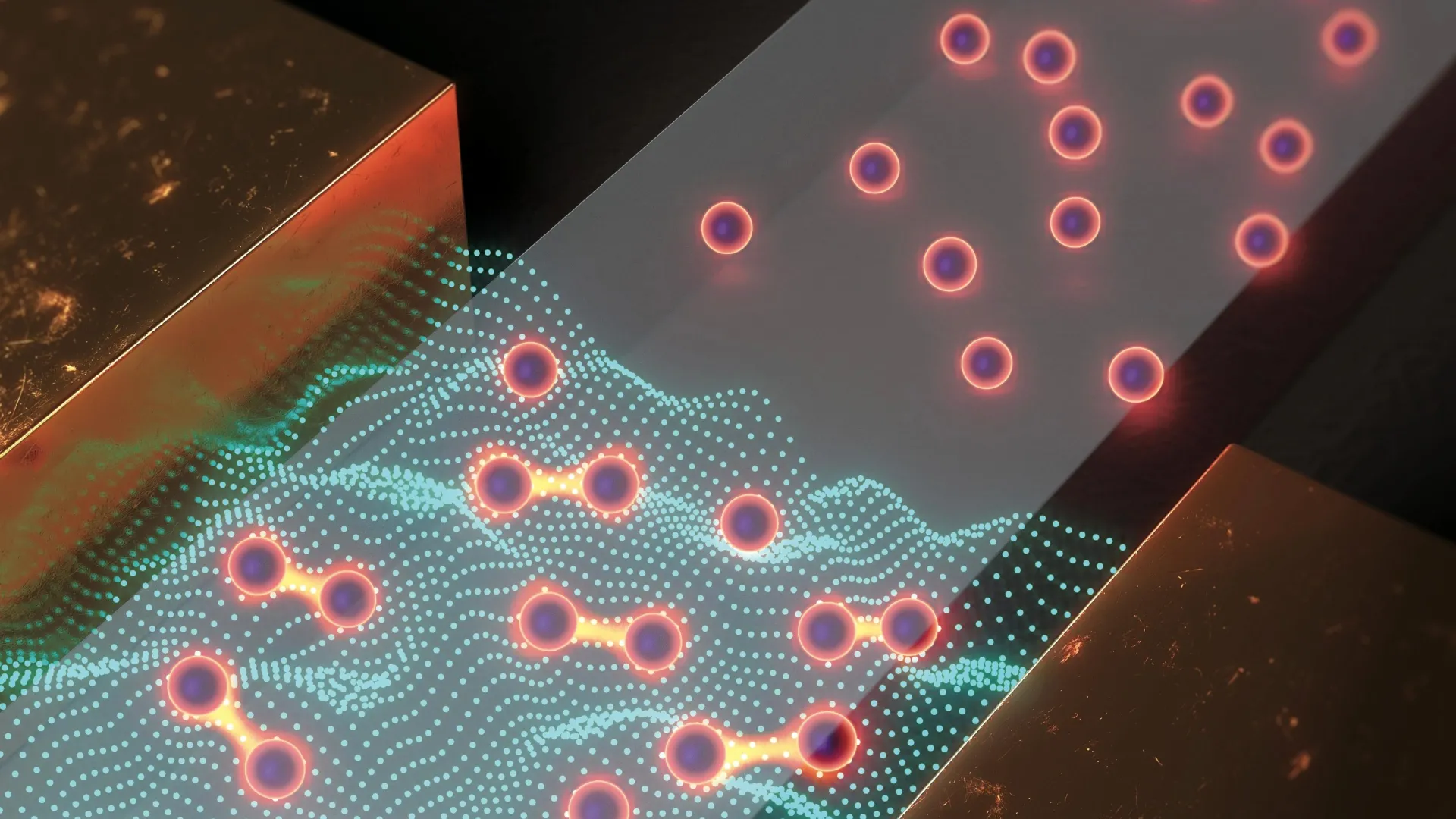
The study explains that superconductors lose their resistance only up to a material‑specific critical current. In type‑II superconductors, this limit is usually reached early because magnetic vortices—tiny regions where magnetic flux penetrates the material—start to move as the current rises. Their motion creates resistance and heat, destroying the superconducting state before the intrinsic, higher “depairing current” is reached.
Lead author Eryin Wang describes the depairing current as the point where the quantum phase of the superconductor is twisted so far that Cooper pairs break apart. Conventional direct‑current measurements rarely achieve this limit because vortex motion and heating intervene first.
To bypass the vortex problem, the researchers applied current for an extremely brief interval, on the order of a picosecond. "Our strategy was to outrun the vortex dynamics," Wang told ScienceDaily. Vortices can travel tens of kilometres per second, but in a picosecond they move only a few tens of nanometres, insufficient to generate the disruptive heating that normally ends superconductivity.
The experiment showed that these picosecond pulses can drive the material close to its depairing current, revealing a new way to explore the fundamental limits of superconductivity and potentially inform the design of future quantum devices.
For background on related superconductivity research, see Felo News’ recent article on engineered quantum‑vacuum environments enhancing superconductivity (quantum‑vacuum‑fluctuations‑superconductivity).
Key facts
- Superconductors lose zero resistance only up to a critical current, after which vortices move and cause heating. (sciencedaily.com)
- The intrinsic limit, called the depairing current, is higher than the usual critical current. (sciencedaily.com)
- Researchers applied current pulses lasting about a picosecond to outrun vortex motion. (sciencedaily.com)
- Lead author Eryin Wang said the approach lets the superconductor approach its depairing current. (sciencedaily.com)
Sources
- [1] sciencedaily.com — originally reported as “Scientists just pushed superconductors beyond their usual current limit”