Brief
NASA targets 2028 launch for SR‑1 Freedom nuclear‑powered Mars probe
The SR‑1 Freedom mission would use nuclear electric propulsion to reduce travel time and radiation exposure for future crewed trips.
By Felo News Desk · Published
NASA announced that its Space Reactor‑1 Freedom (SR‑1) spacecraft will attempt an uncrewed Mars mission by the end of 2028, with arrival expected in 2029, Technology Review reported.
What happened
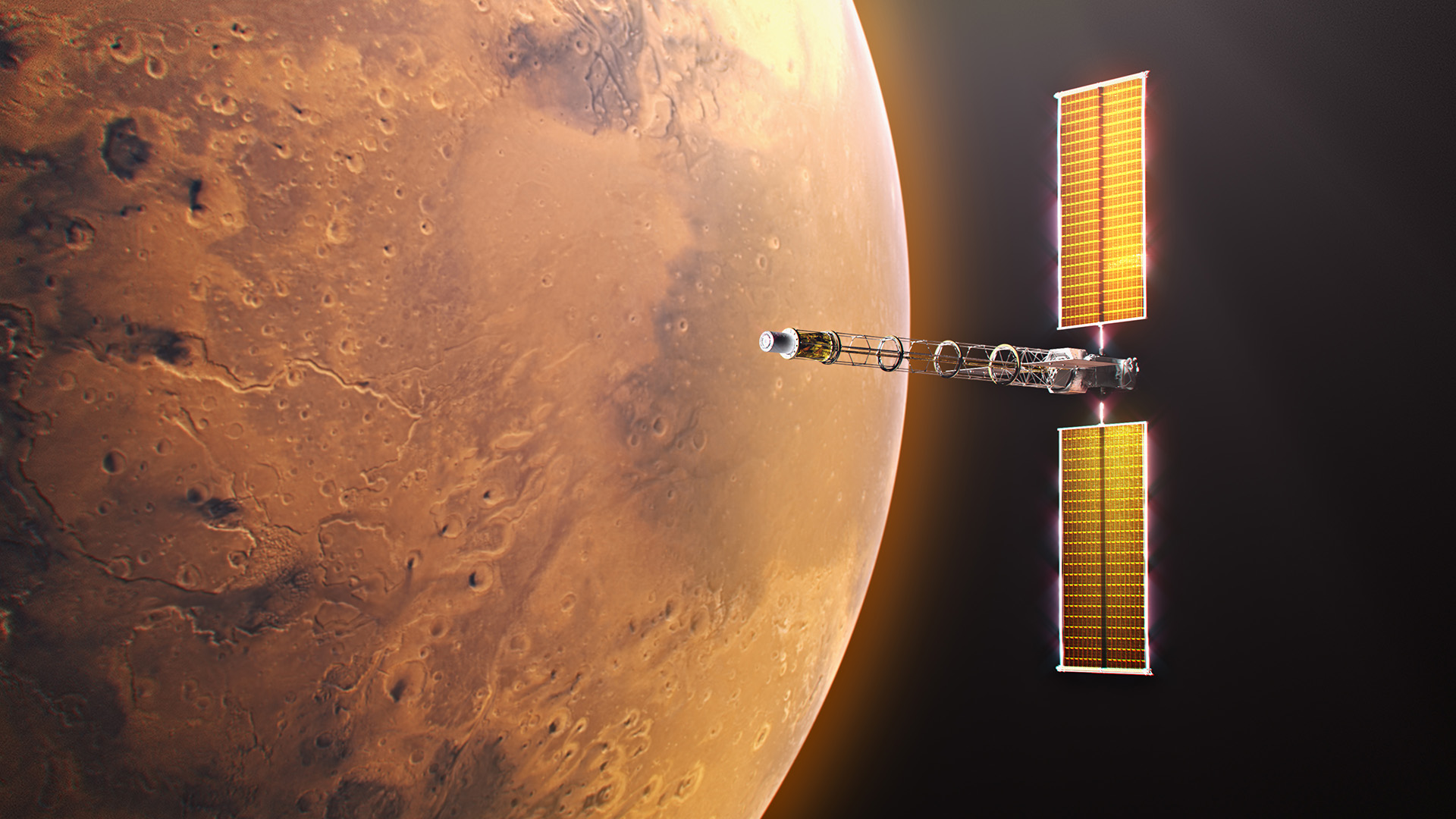
The agency unveiled the SR‑1 Freedom program just before the Artemis II crew performed its lunar flyby in April. The spacecraft will be the first interplanetary vehicle powered by a fission reactor, intended to demonstrate nuclear electric propulsion for faster, more efficient travel to Mars and beyond.
What the report adds
Technology Review notes that the reactor will generate at least 20 kilowatts of power, a fraction of Earth‑based plants but sufficient for the electric thrusters. The design uses a uranium‑fueled reactor whose heat is converted to electricity, then used to ionize a propellant gas that is expelled by magnetic fields. The thrust is low but continuous, allowing long‑duration acceleration.
The article also describes the spacecraft’s appearance: concept art shows a “colossal fletched arrow” with large fins that radiate heat to cool the reactor. The rear section will house the power‑and‑propulsion system, while the nose contains the reactor.
What was said
"You wake up to that announcement, and it puts a big smile on your face," said Simon Middleburgh, co‑director of the Nuclear Futures Institute at Bangor University in Wales.
"I think it’s a very doable technology," said Philip Metzger, a spaceflight engineering researcher at the Florida Space Institute.
"The approach is very low thrust, but very efficient," said Sebastian Corbisiero, the U.S. Department of Energy’s national technical director of space reactor programs.
How it came about
NASA’s interest in nuclear propulsion dates back 75 years, with several programs started and later cancelled, the most recent being DRACO, a joint NASA‑Department of Defense effort that ended in 2025 due to cost and testing challenges. The current $2 billion SR‑1 Freedom effort follows a series of contracts and safety reviews, including the Ignition event covered by Felo News on 20 October 2026.
Key facts
- NASA plans to launch the SR‑1 Freedom nuclear‑reactor spacecraft by late 2028 for an uncrewed Mars mission. (technologyreview.com)
- The reactor will produce at least 20 kilowatts of power for nuclear electric propulsion. (technologyreview.com)
- The spacecraft design features large fins to radiate heat and a uranium‑filled reactor in the nose. (technologyreview.com)
- NASA’s previous nuclear propulsion program, DRACO, was cancelled in 2025. (technologyreview.com)
Sources
- [1] technologyreview.com — originally reported as “Nuclear-powered spaceships”