Brief
NASA installs eight Roll‑Out Solar Arrays to boost ISS power
Eight new IROSAs will raise the station’s power generation by more than 160 kilowatts for research and operations.
By Felo News Desk · Published
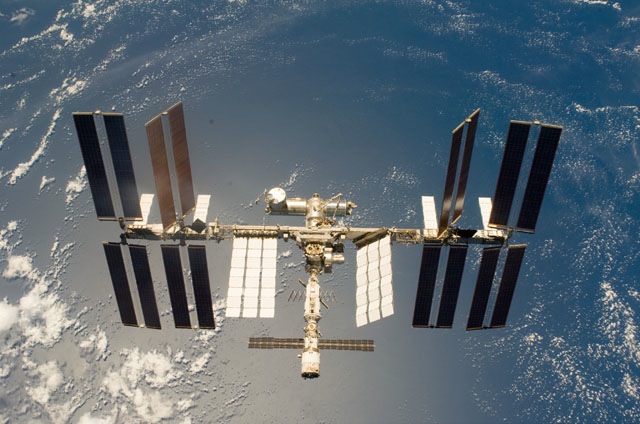
NASA announced that eight International Space Station Roll‑Out Solar Arrays (IROSAs) are now installed on the orbiting laboratory, raising its power capacity by over 160 kW, according to a NASA release on Oct. 15, 2026.
What happened
Six IROSAs were fitted between 2021 and 2023, and a further two launched aboard SpaceX’s 35th commercial resupply mission in 2023. The arrays, designed by Redwire under a Boeing contract, unfurl like a yoga mat and generate about 28 kW each despite being half the size of legacy panels.
What the reports add
The release notes that the full complement of eight arrays supports life‑support systems, daily activities and hundreds of research investigations, and underpins future deep‑space missions such as planetary‑defense tests.
What was said
Christine E. Giraldo, of the ISS Research Communications Team, said the upgrade “helps advance technology that will extend the agency’s reach into the solar system.”
How it came about
The IROSAs stem from a 2017 technology demonstration that proved the autonomous, self‑deploying design, prompting NASA to request additional units in 2023.
Key facts
- Eight IROSAs are now installed on the ISS, increasing power by over 160 kW. (nasa.gov)
- Each IROSA produces about 28 kW despite being half the size of legacy arrays. (nasa.gov)
- The arrays were designed and built by Redwire under a Boeing contract. (nasa.gov)
- Six arrays were installed between 2021‑2023; two more arrived on SpaceX’s 35th CRS mission. (nasa.gov)
Sources
- [1] nasa.gov — originally reported as “Power Up: Roll Out Solar Arrays Boost Space Station Power Supply”