Brief
NASA satellites record surge of Amazon fires linked to El Niño drought
NASA data show a rapid increase in fires across the central and eastern Amazon in October, with hazardous air quality in Manaus.
By Felo News Desk · Published
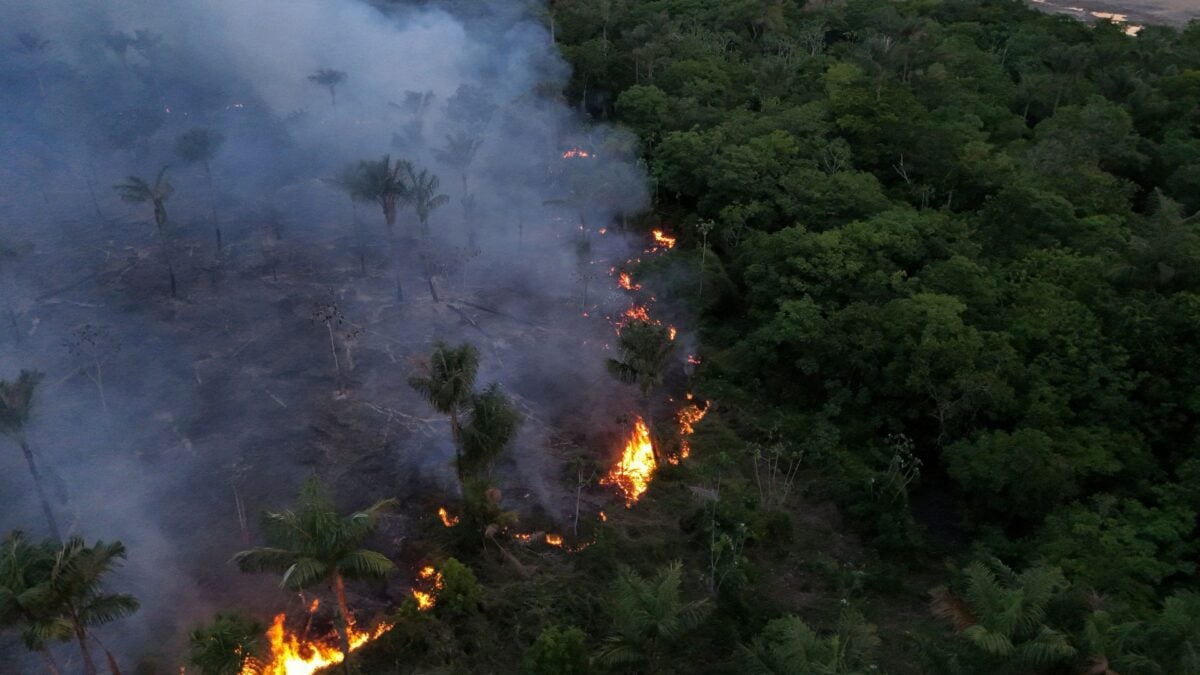
NASA satellite observations show a sharp rise in wildfires across the central and eastern Amazon beginning in September 2026, a pattern scientists attribute to drought conditions tied to the strongest El Niño on record.
What happened
Data from NASA's Fire Information for Resource Management System (FIRMS), the Global Fire Emissions Database (GFED) and NASA Worldview indicate that fire activity intensified across the Amazon basin in early September, spreading eastward toward the river mouth. On 12 October 2026, the MODIS instrument aboard the Aqua satellite captured massive plumes of smoke over both sides of the Amazon River, enveloping the city of Manaus. City officials reported fine particulate matter (PM2.5) concentrations above 135 µg/m³, placing air quality in the second‑worst regional category. The smoke prompted mask mandates, school closures and the suspension of public events for the city’s two‑million residents.
What the reports add
ScienceDaily notes that the fire surge aligns with a “cascade” of tropical fires described by Douglas Morton, an Earth system scientist at NASA’s Goddard Space Flight Center, who links Amazon fires to earlier peat‑fire activity in Indonesia triggered by the same El Niño pattern. The article also contrasts the Amazon situation with other weather phenomena, explaining that El Niño influences rainfall over months rather than the minutes‑long impacts of tornadoes or thunderstorms.
What was said
Douglas Morton told ScienceDaily that the Amazon fires are part of a larger “cascade” of tropical fires driven by El Niño‑related rainfall disruptions. He emphasized that the pattern typically begins near the equator, where drought ignites peat fires in Indonesia, before spreading to other regions such as the Amazon.
How it came about
Earlier this month, Felo News reported on the same El Niño‑driven fire surge, citing NASA data that recorded 1,679 fires in Amazonas state during the first two weeks of October, a 253 % increase over the same period in 2025. The current coverage expands on that report by detailing the satellite instruments that captured the October 12 plume and by providing the latest air‑quality measurements in Manaus.
Key facts
- NASA satellites detected a sharp increase in Amazon fires starting in September 2026. (sciencedaily.com)
- On 12 October 2026, MODIS on NASA's Aqua satellite captured large smoke plumes over the Amazon River. (sciencedaily.com)
- PM2.5 levels in Manaus exceeded 135 µg/m³, prompting health alerts and school closures. (sciencedaily.com)
- Douglas Morton described the fires as part of an El Niño‑driven cascade of tropical fires. (sciencedaily.com)
Sources
- [1] sciencedaily.com — originally reported as “NASA discovers hidden fires burning beneath the Amazon rainforest”