Brief
New Jurassic crocodile‑relative fossil unearthed in Morocco
The 170‑million‑year‑old specimen, named Ctenosuchus tenuidens, reveals specialised feeding habits unlike modern crocodiles.
By Felo News Desk · Published
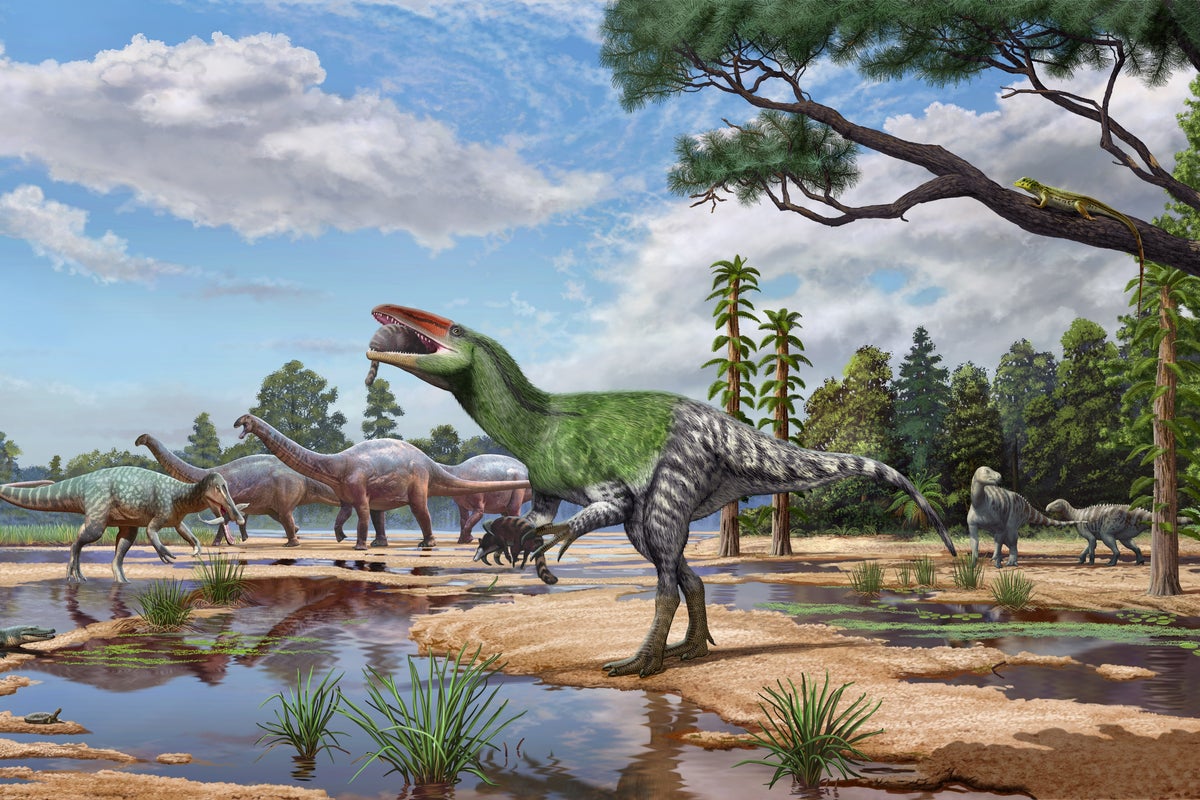
Researchers from the University of Portsmouth and Hassan II University of Casablanca announced the discovery of a previously unknown Jurassic reptile related to crocodiles in the Atlas Mountains of southeastern Morocco. The 170‑million‑year‑old fossils were recovered from river‑ and lake‑deposits and belong to a species they have named Ctenosuchus tenuidens.
The animal had a long, narrow snout lined with exceptionally thin, needle‑like teeth. Lead author Hamzah Imran said the teeth were too delicate for catching large, struggling prey, suggesting the creature fed on soft items such as tiny fish, shrimp and worms. The study, published in the Journal of Vertebrate Paleontology, notes that the tooth morphology mirrors that of ancient mesosaurs and later long‑snouted pterosaurs, indicating convergent evolution in feeding adaptations.
Key facts
- The fossil was found in rocks formed in ancient rivers and lakes in the Atlas Mountains of southeastern Morocco. (independent.co.uk)
- The specimen dates to about 170 million years ago, placing it in the Jurassic period. (independent.co.uk)
- The new species was named Ctenosuchus tenuidens and had a long, narrow snout with thin, needle‑like teeth. (independent.co.uk)
- Lead author Hamzah Imran said the teeth indicate a diet of soft prey such as tiny fish, shrimp and worms. (independent.co.uk)
- The research was published in the Journal of Vertebrate Paleontology. (independent.co.uk)
Sources
- [1] independent.co.uk — originally reported as “Fossilised dinosaur-era reptile related to crocodile discovered in Morocco”