With a Better Understanding of Physics, We Could Predict Volcanic Eruptions
Volcanologists are striving to predict eruptions as accurately as weather forecasts, leveraging better instrumentation, data science, and a deeper grasp of magma physics. While current warnings rely on patterns, breakthroughs in modeling and monitoring may one day provide precise eruption probabili…
Volcanic eruptions have long been a source of awe and devastation, but the idea of forecasting them with the same certainty as weather has moved from science fiction to a realistic goal for many researchers. Recent advances in seismology, satellite imaging, and machine‑learning analytics are sharpening our ability to detect the subtle signs that a volcano is about to erupt. Yet the challenge remains: volcanoes operate deep underground, in complex, idiosyncratic plumbing systems that differ from one peak to another.
From Pinatubo to Present: The Evolution of Volcanic Forecasting
In 1991, Mount Pinatubo in the Philippines erupted with a force that obliterated its summit and killed more than 800 people. Scientists had deployed a network of instruments before the eruption and were able to issue an evacuation order days early, saving countless lives. However, their forecast was more a cautious warning than a precise prediction. They could not say with confidence that an explosive eruption would occur on a specific date or that it would involve a particular style of eruption.
Since then, the field has made significant strides. Modern volcano observatories now use high‑resolution seismometers, ground‑deformation sensors, gas analyzers, and satellite remote sensing to monitor the internal state of volcanoes in real time. Machine‑learning algorithms sift through terabytes of data, identifying patterns that might precede an eruption. Yet, even with these tools, most alerts still only indicate heightened unrest rather than an imminent eruption.
Why Volcanic Forecasting Is Harder Than Weather Prediction
Weather systems are continuous, observable, and governed by well‑understood atmospheric physics. In contrast, magma resides kilometers below the surface and erupts only sporadically, often after decades of dormancy. Each volcano has a unique subsurface architecture, magma chemistry, and eruption history. These differences mean that a single set of equations cannot predict every eruption, and the signals that precede an eruption can vary dramatically from one volcano to another.
Moreover, eruptions can be triggered by multiple, interrelated factors—temperature and pressure changes in a magma chamber, the presence of gas bubbles, the strength of surrounding rock, and regional tectonic stresses. These complex interactions create a chaotic system that is difficult to model with simple equations.
Where the Field Is Heading: The Ex‑X Project and Beyond
One promising initiative is the Ex‑X (Expecting the Unexpected) project led by the University of Bristol. The project focuses on the Eastern Caribbean volcanoes, which frequently shift from lava‑heavy eruptions to sudden, explosive events. By deploying dense seismometer arrays and fiber‑optic cables, researchers aim to capture the tiniest seismic signals and use machine‑learning models to detect subtle changes in magma behavior.
In addition to seismic data, scientists are turning to geochemistry. By sampling fresh lava and ash, they can track changes in magma composition that may signal an impending eruption. Laboratory experiments that replicate extreme volcanic conditions are also helping to refine numerical models of magma dynamics.
What We Know and What We Still Don’t
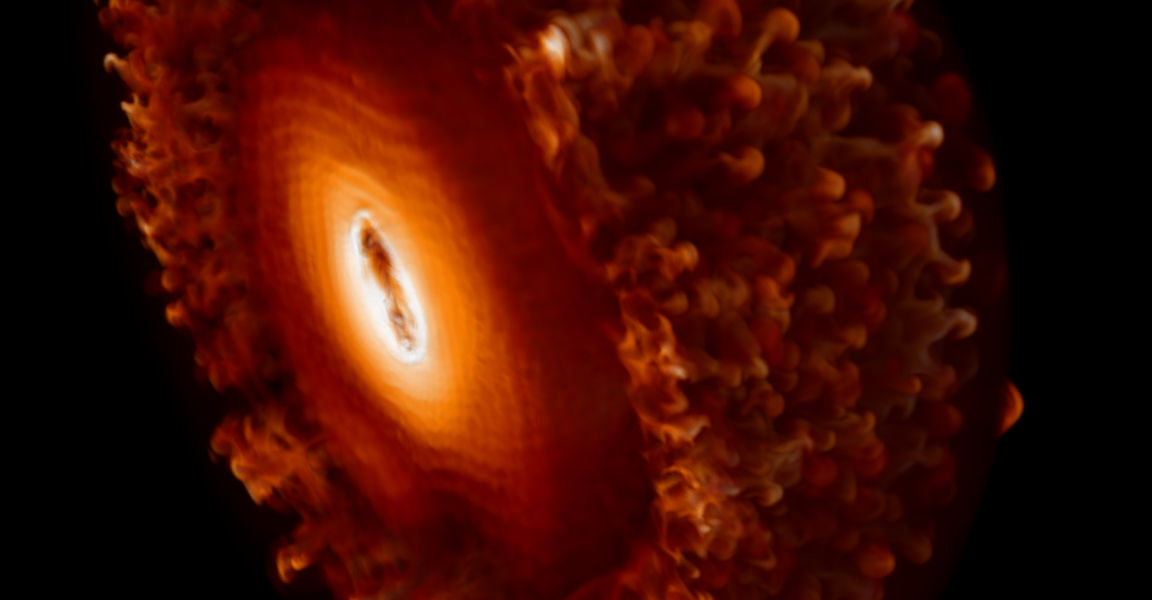
Scientists have identified some governing equations—such as the Navier‑Stokes equations for fluid flow and the heat equation for cooling—that describe lava and pyroclastic flows after an eruption has begun. However, these equations do not predict when an eruption will start. The missing piece is a comprehensive understanding of the physics that drive a magma chamber from a stable to a catastrophic state.
Until that physics are fully understood, eruption forecasts will likely remain probabilistic. For example, a volcano might be assigned an 80% chance of erupting within the next week, but the exact style—whether it will produce lava fountains, ash columns, or pyroclastic flows—may still be uncertain.
Despite these challenges, the trajectory of volcanic research is clear: by combining dense monitoring networks, advanced data analytics, and deeper physical insights, scientists are inching closer to weather‑like precision in eruption forecasting. Such progress could dramatically improve hazard mitigation for the roughly 800 million people who live within 100 kilometers of an active volcano.
What’s Next?
Future work will focus on integrating multidisciplinary data—seismic, geochemical, and geophysical—into unified models that can simulate the complex behavior of magma chambers. Continued investment in real‑time monitoring and machine‑learning tools will also be essential. As our understanding of volcanic physics deepens, the hope is that we will one day be able to issue precise, actionable forecasts that give communities the time they need to evacuate safely.
Why it matters
Accurate volcanic forecasts can save lives, protect infrastructure, and reduce economic losses by allowing timely evacuations and targeted disaster response.
Key points
- Volcanoes erupt less frequently and are harder to monitor than weather systems.
- Modern observatories use seismology, satellite imaging, and machine learning to detect unrest.
- The Ex‑X project focuses on Caribbean volcanoes to study rapid transitions to explosive eruptions.
- Understanding magma physics is essential for precise eruption predictions.
- Current forecasts are probabilistic; future models aim for weather‑like precision.
Frequently asked questions
What is the current state of volcanic forecasting?
Today, most volcano observatories can detect heightened unrest and issue alerts, but precise predictions of eruption timing and style are still rare.
How does the Ex‑X project improve eruption forecasting?
By deploying dense seismic networks and using machine‑learning to analyze subtle signals, Ex‑X seeks to uncover the physical triggers of explosive eruptions.
Why can’t we predict eruptions as accurately as weather?
Because magma operates deep underground, in unique and complex systems that vary widely between volcanoes, making universal predictive models difficult.