The Moon May Be Hiding a 100-Million-Year Record of Exploding Stars
A new model of lunar soil mixing shows the Moon’s regolith can archive supernova debris for up to 100 million years. The framework, validated with Apollo samples, will help future Artemis missions decode the Solar System’s galactic history.
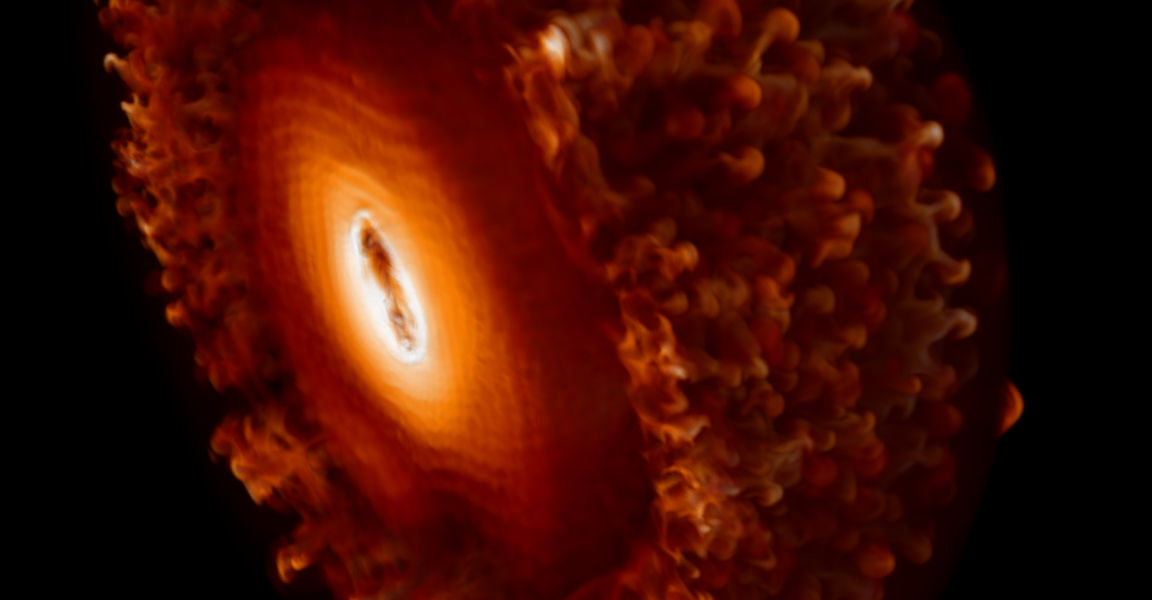
When massive stars end their lives in spectacular explosions, they scatter freshly forged elements across the cosmos. While Earth’s oceans capture some of this interstellar material, the record is limited to the last ten million years. A team led by University of Hawai‘i researcher Emily Costello has shown that the Moon’s constantly churned surface can preserve a far older archive, spanning up to a hundred million years.
Why the Moon is a Better Cosmic Archive
Unlike Earth, the Moon lacks a magnetic field, atmosphere, and active geology. Its surface is a static blanket of regolith—loose, pulverized rock and dust—built up by billions of years of micrometeorite impacts and occasional larger collisions. Each impact reshuffles the soil in a process called “impact gardening,” which, over time, mixes and buries foreign material deep beneath the surface. Because the Moon’s surface is not eroded by weather or tectonics, the layers of regolith act as a time capsule that can retain signatures of past events for much longer than Earth’s sedimentary records.
Costello and colleagues argue that the regolith’s long‑term stability, combined with the Moon’s exposure to interstellar particles, makes it an ideal repository for supernova debris. The team’s model predicts that the Moon could preserve a record of supernova pulses that occurred as far back as 80 to 100 million years ago.
Building a Unified Stochastic Model of Impact Gardening
The researchers developed a sophisticated “unified stochastic model” to describe how impacts of all sizes—from microscopic dust grains to large asteroids—reshape the regolith. The model balances several competing processes: impact compaction, excavation, radioactive decay, and space weathering. By treating these mechanisms as part of a single continuum, the team can simulate how the soil’s composition changes over time.
Because each lunar core has experienced a unique impact history, separating a widespread interstellar signal from local variations requires advanced statistical techniques. The model treats impact gardening as a competition between forces that bury the soil and those that dig it back up, while also tracking the radioactive decay of star‑derived isotopes and mapping when supernova ejecta were deposited.
Validating the Model with Apollo Samples
To test their framework, the scientists compared model predictions with data from Apollo core samples. These cores contain measurable concentrations of isotopes such as Iron‑60, a hallmark of nearby supernova explosions. The model successfully reproduced the depth‑concentration patterns of Iron‑60 observed in the Apollo regolith, confirming that the mathematical approach captures the essential physics of lunar soil mixing.
Beyond Iron‑60, the team used the validated model to forecast how other heavy elements—Plutonium‑244, Iodine‑129, Hafnium‑182, and Curium‑247—would be distributed within the regolith over time. The predictions align with known supernova timelines recorded on Earth, suggesting that the Moon’s soil indeed holds a detailed record of past stellar explosions.
Implications for Future Artemis Missions
NASA’s Artemis program plans to return astronauts to the Moon and drill deeper cores than those collected during the Apollo era. These new samples will contain a richer, older record of interstellar material. By applying Costello’s gardening model to the deeper layers, scientists can reconstruct a more complete history of the Solar System’s passage through the galaxy and the frequency of nearby supernova events.
“If we have the knowledge to read the stardust, the remains of past stars can guide us through the vast history of our Earth‑Moon neighborhood,” Costello said. “It’s beautiful that the Moon can serve as a time capsule for stellar explosions.”
What’s Next?
The research team plans to refine the model further by incorporating additional isotopic data and by simulating the effects of future impact events. As Artemis missions deliver new samples, the model will be calibrated against fresh measurements, potentially extending the supernova record back even further into the past.
Ultimately, this work opens a new window into the cosmic environment that shaped our planetary system, offering insights into the frequency and proximity of supernovae that have influenced Earth’s climate and biology over geological timescales.
Why it matters
Understanding the Moon’s record of supernova debris lets scientists trace the Solar System’s galactic journey and assess the impact of nearby stellar explosions on Earth’s history.
Key points
- The Moon’s regolith can archive supernova debris for up to 100 million years.
- A unified stochastic model simulates impact gardening and isotope decay.
- Apollo core data validate the model’s predictions for Iron‑60 and other isotopes.
- Future Artemis missions will provide deeper samples to extend the supernova record.
- The research links lunar geology with the Solar System’s galactic environment.
Frequently asked questions
What is impact gardening?
Impact gardening is the process by which meteorite impacts of various sizes continuously churn, mix, and bury the lunar surface material, reshaping the regolith over time.
Why can the Moon preserve older records than Earth?
The Moon lacks atmospheric erosion, weather, and tectonic activity, so its regolith layers remain intact for much longer, preserving isotopic signatures for tens of millions of years.
How will Artemis missions help this research?
Artemis will drill deeper cores than Apollo, providing samples that contain older supernova debris, which can be analyzed using the new gardening model to reconstruct a longer history.