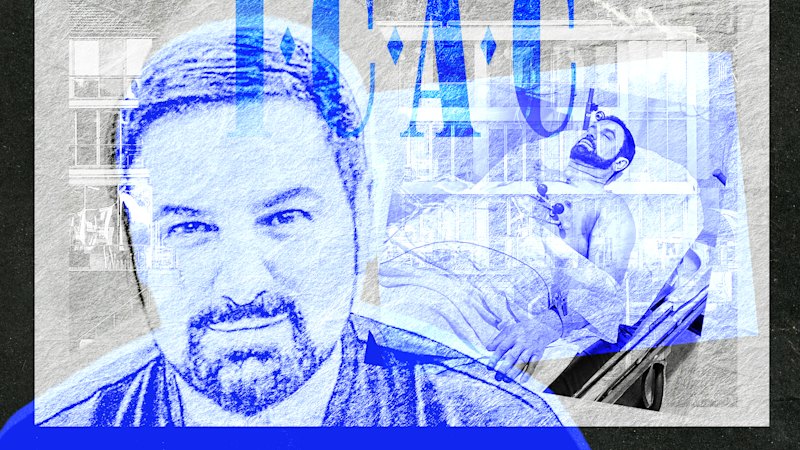
Republican running for House seat sues Democrat-run city for blocking GOP ‘town hall’
Republican congressional hopeful Joe Cinquemani sued Mount Vernon for blocking a GOP voter outreach town hall, claiming a First Amendment violation. The city later conceded scheduling conflicts were not the real reason, and a judge has postponed the case until October, giving the city time to allow…
Joe Cinquemani, the Republican nominee for New York’s 16th Congressional District, filed a federal lawsuit last week after Mount Vernon officials denied him permission to host a GOP‑run voter outreach town hall at the city’s Doles Recreation Center. The suit, grounded in First Amendment arguments, alleges that the city’s decision was politically motivated and aimed at suppressing Republican messaging in a heavily Democratic district.
Background: The 16th District and Mount Vernon
The 16th Congressional District covers parts of the Bronx and Westchester County, a region that has leaned Democratic for decades. According to Westchester County Board of Elections data, the district’s registered voters outnumber Republicans by more than three to one, with 264,463 Democrats compared to 77,136 Republicans. The incumbent, Democrat Rep. George Latimer, is expected to win re‑election in the November 4 contest, but Cinquemani is mounting a campaign that seeks to capitalize on local dissatisfaction with the status quo.
Mount Vernon, a suburb of New York City, is governed entirely by Democrats. The city’s leadership, including the mayor and council, has historically been skeptical of Republican outreach efforts. In the summer, the city’s Deputy Policy Commissioner, Jennifer Lackard, was arrested for allegedly assisting a gang member in a drive‑by shooting outside a Bronx courthouse—an incident that further strained community relations and fueled calls for new leadership.
The Town Hall Conflict
Cinquemani’s campaign planned a town hall on September 24 at the Doles Recreation Center, a venue the city had previously approved for other political events. However, city officials cited a “scheduling conflict” to deny the GOP’s request. Cinquemani argued that the denial was a pretext to prevent him from addressing issues that resonated with Mount Vernon residents, such as economic decline and public safety.
In his complaint, Cinquemani claimed that the city’s corporation counsel dismissed the political nature of the request, stating that the event would not feature campaign signs or literature. He noted that the town hall would include speakers from the statewide GOP ticket, including Governor candidate Bruce Blakeman, and would focus on local concerns. The lawsuit was filed in federal court, asserting that the denial violated the candidate’s First Amendment rights to free speech and political expression.
City’s Response and Judicial Intervention
Following the filing, Mount Vernon officials retracted their earlier statement about a scheduling conflict. The city acknowledged that the denial was not due to logistical issues but was instead a political decision. Judge Nelson Roman, presiding over the case, adjourned the matter until October, effectively giving the city a month to allow the event to proceed. This postponement nullifies the immediate impact of the lawsuit but leaves the underlying question of political bias unresolved.
The city’s corporation counsel has maintained that the denial was unrelated to Cinquemani’s party affiliation, but the timing and context suggest otherwise. The judge’s ruling indicates that the court is willing to scrutinize the city’s actions, but the delay also provides the city with an opportunity to address the concerns and potentially host the town hall.
Implications for Local Politics
The lawsuit underscores the tension between partisan politics and local governance in suburban New York. Mount Vernon’s decision to block a Republican event raises questions about equal access to public venues for all political parties, especially in districts that are not competitive. If the city fails to comply with the judge’s directive, it could face further legal challenges and scrutiny from state election officials.
For Cinquemani, the case is a double‑edged sword. While it draws attention to perceived political suppression, it also highlights the uphill battle he faces against a well‑established Democratic incumbent in a district that heavily favors Democrats. The town hall, if it goes ahead, could serve as a platform to galvanize Republican voters and address community grievances, but it may also be perceived as a political stunt by some residents.
Ultimately, the outcome of this lawsuit will set a precedent for how municipalities handle political events in partisan contexts. It will also influence the broader conversation about First Amendment protections for candidates in local elections.
As the case moves toward October, both sides will likely prepare for a potential showdown in court. The city may attempt to negotiate a compromise, while Cinquemani’s campaign will continue to emphasize the importance of free political expression and the need for equal access to public spaces.
What Happens Next?
The court’s adjournment until October means that Mount Vernon has a month to reconsider its stance and potentially allow the town hall to proceed. If the city complies, the event could take place on September 24, offering Cinquemani a chance to connect with voters directly. If the city refuses again, Cinquemani may seek further legal remedies, possibly escalating the case to higher courts.
Meanwhile, the 16th District’s November election remains a focal point for both parties. With the district’s demographics heavily favoring Democrats, Cinquemani’s campaign will need to focus on local issues and voter turnout strategies to make any significant inroads. The outcome of the town hall and the lawsuit may influence voter perceptions and the broader narrative around political fairness in the region.
In the coming weeks, observers will watch closely how the city and the court handle this dispute, as it could have lasting implications for political engagement and the administration of public spaces in New York’s suburban communities.
Why it matters
The case highlights potential partisan misuse of public venues and raises questions about First Amendment rights for candidates in local elections. It also reflects broader tensions in suburban politics where one party dominates city leadership while the other seeks to gain ground.
Key points
- Joe Cinquemani sued Mount Vernon for blocking a GOP town hall
- The city denied the request citing a scheduling conflict, later retracted the claim
- Judge Nelson Roman adjourned the case until October, giving the city time to comply
- Mount Vernon is a Democrat‑controlled city in a heavily Democratic district
- The lawsuit raises First Amendment concerns about political bias in venue access
Frequently asked questions
What was the reason given by Mount Vernon for denying the town hall?
The city cited a scheduling conflict, but later admitted it was not the real reason.
What does the judge’s adjournment mean for the case?
The case is postponed until October, giving the city a month to allow the event.
Will the town hall still happen?
If the city complies with the judge’s directive, the town hall could take place on September 24.