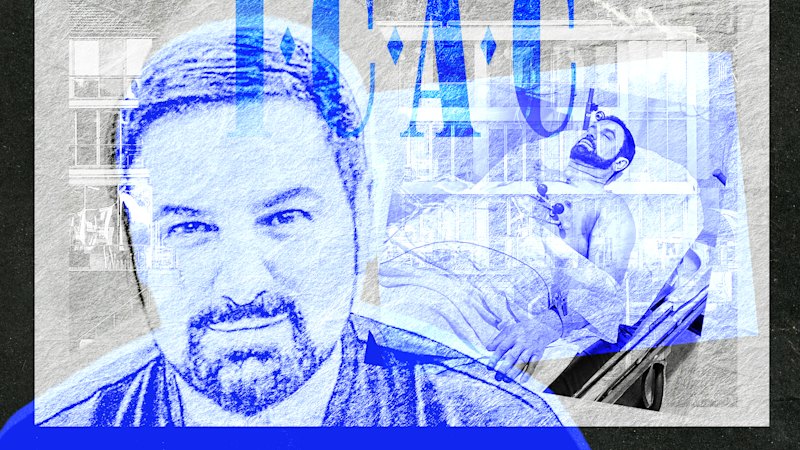
A Vermont man is on trial for shooting 3 Palestinian students. He claimed the CIA told him to do it
Jason Eaton, a 51‑year‑old Vermont man, is on trial for shooting three Palestinian college students who were walking past his home. He claims he was following CIA and Mossad orders, a story that forms the basis of his insanity defense. The case has sparked debate over hate crimes, mental illness, a…
On Monday, a Burlington courtroom became the stage for a case that has drawn attention far beyond Vermont’s borders. Jason Eaton, a 51‑year‑old resident of the state, stood before a jury charged with attempting to murder three Palestinian college students who were walking past his house a few days after Thanksgiving 2023. Eaton has pleaded not guilty but has not denied that he fired the shots that left the men wounded and, in one case, paralyzed.
What Happened
Three men—Hisham Awartani, Tahseen Aliahmad, and Kinnan Abdalhamid—were walking near the University of Vermont campus after dusk when Eaton opened fire from his porch. The victims were all 20 at the time of the shooting, later turning 23. Awartani, who was studying at Brown University, was shot in the chest and suffered a spinal cord injury that left him paralyzed from the waist down. Aliahmad, a Trinity College student, was hit in the collarbone, while Abdalhamid, a Haverford College student, was wounded in the right buttock.
Law enforcement recovered three shotguns from Eaton’s apartment, as well as a Ruger .380‑caliber handgun that forensic analysis linked to the crime. Eaton had purchased the handgun seven months earlier from a local gun store.
Jason Eaton’s Claims
Eaton has told jurors that he was acting on orders from the CIA and Mossad, the Israeli intelligence agency. He says that messages were transmitted to him via FM radio and that he felt a divine mandate to protect his Jewish neighbors. According to defense attorney Joshua O’Hara, Eaton’s delusions began after he lost his job at a credit union two weeks before the shooting. While listening to a local NPR affiliate, Eaton believed he was receiving instructions from U.S. and Israeli intelligence, which escalated from encouragement to a command to shoot.
Defense psychiatrist testimony is expected to support Eaton’s claim of a delusional, psychotic disorder. The psychiatrist will argue that Eaton was unable to appreciate the wrongfulness of his actions because he believed he was following government directives or divine instruction.
Prosecution’s Position
Prosecutor Sally Adams argued that Eaton’s actions were intentional and not the result of a mental disease. She cited state psychiatric testimony that found Eaton did not suffer from a mental defect. Adams emphasized that the evidence—such as the recovered firearms and the timing of the shooting—demonstrated that Eaton intended to kill the men and that no legal justification existed for his use of deadly force.
Adams also highlighted the absence of hate crime charges, noting that while the shooting occurred weeks after the start of the Israel-Hamas war, it remains unclear whether anti‑Palestinian animus motivated Eaton or if his actions were driven by a disturbed mental state.
Context and Background
The three victims grew up together in Ramallah, a city in the West Bank, and were close friends before moving to the United States for college. Their walk near the university campus was a routine holiday outing, described by Awartani as a visit to his grandmother’s house followed by a bowling alley trip to celebrate a cousin’s birthday. The men were speaking a mix of English and Arabic and, according to testimony, wore traditional Palestinian scarves known as keffiyehs.
The incident has reverberated in both Vermont and the West Bank, prompting discussions about the intersection of mental health, foreign intelligence claims, and potential hate crimes. Authorities have yet to file hate crime charges, leaving the question of whether the shooting was motivated by anti‑Palestinian bias unresolved.
What Happens Next
If Eaton is convicted of attempted murder, he faces up to life in prison. A verdict of not guilty by reason of insanity could result in mandatory mental health treatment. The trial is expected to continue with further testimony from psychiatric experts and witnesses, including the victims themselves and a neighbor who heard the gunfire.
The case remains a stark reminder of how personal crises, alleged foreign influence, and the legal system intersect in a modern American courtroom.
Why it matters
The trial highlights the challenges courts face when defendants claim foreign intelligence orders and mental illness, raising questions about the limits of self‑defense and the need for clear hate‑crime investigations.
Key points
- Jason Eaton shot three Palestinian students in Vermont, claiming CIA/Mossad orders
- Defense argues Eaton suffered from a psychotic disorder after job loss
- Prosecution maintains Eaton intended to kill and lacks mental illness
- No hate crime charges filed, leaving motive unclear
- Victims are 23‑year‑olds from the West Bank, now injured
- Trial could result in life imprisonment or mandatory treatment
Frequently asked questions
What charges is Jason Eaton facing?
Eaton faces attempted murder charges and could be convicted of life in prison or, if found not guilty by reason of insanity, ordered into mental health treatment.
Why were no hate crime charges filed?
Authorities have not yet determined whether anti‑Palestinian bias motivated the shooting, so hate crime charges remain pending.