Brief
Scientists probe surge of dead whale calves on Argentina’s Patagonian coast
Investigators link the unusual calf deaths to bacterial infections possibly worsened by kelp gull attacks and changing sea conditions.
By Felo News Desk · Published
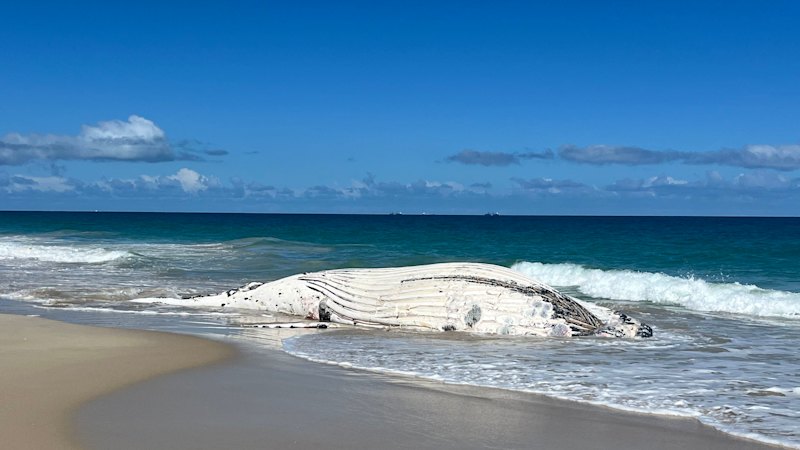
Scientists are investigating an unusually high number of dead southern right whale calves washing up on Argentina’s Patagonian coast, particularly around Peninsula Valdés and the city of Puerto Madryn, according to the Independent.
What happened
Scores of whale calf carcasses have been found on beaches near the Gulf of Puerto Madryn, a key breeding area in Chubut province. Researchers say the deaths have been recorded over the current season, which runs until late November, but a precise toll has not been released.
What the reports add
Marcela Uhart, a veterinarian with the One Health Institute at UC Davis, leads the Southern Right Whale Health Monitoring Program and notes that 23 years of monitoring make this event stand out as unusual. The team is collecting skin and organ samples by boat, plane and drone, and early laboratory work has detected bacteria in the tissues, though the specific microbes are still being cultured.
What was said
"We're looking into the whale calf deaths based on 23 years of monitoring that we have of this same population. That's what allows us to say that this is an unusual event," Uhart told the Independent.
"Changes in marine conditions like warming sea temperatures, potentially linked to climate change or El Niño, could contribute to this perfect storm where this bacteria is powerful enough to overcome the immunity of the babies and cause their deaths," she added.
How it came about
For decades, kelp gulls have pecked at surfacing whales, but adult whales have learned to expose only their heads, protecting their backs. Calves cannot perform this maneuver, leaving them vulnerable to gull-inflicted injuries that may let bacteria enter. Researchers aim to identify the bacteria and any environmental triggers behind the mass mortality.
Key facts
- Scores of southern right whale calves have washed ashore on Argentina's Patagonian coast near Peninsula Valdés. (independent.co.uk)
- Marcela Uhart leads the investigation and heads the Southern Right Whale Health Monitoring Program. (independent.co.uk)
- Bacteria have been detected in calf tissue samples, but the specific microbes are still being identified. (independent.co.uk)
- Researchers suspect kelp gull attacks may introduce bacteria, and warming sea temperatures could be a contributing factor. (independent.co.uk)
Sources
- [1] independent.co.uk — originally reported as “Scientists search for answers as baby whales wash up dead in Argentina”